Latvian family support organisation Tēvi (Fathers) has launched a new alcohol awareness campaign for Movember 2026, encouraging men to take a closer look at how drinking affects their health and everyday lives. Under the slogan “Vecīt, cik ilgi turēsi?” (roughly, “Mate, how long can you keep carrying this?”), the campaign challenges the normalisation of alcohol in Latvian society. Rather than focusing only on traditional Movember themes such as prostate cancer screening, it highlights alcohol as an important and often overlooked factor in men’s physical and mental health. The campaign takes a non-judgemental approach, presenting scientific evidence alongside practical opportunities to reduce or stop drinking.
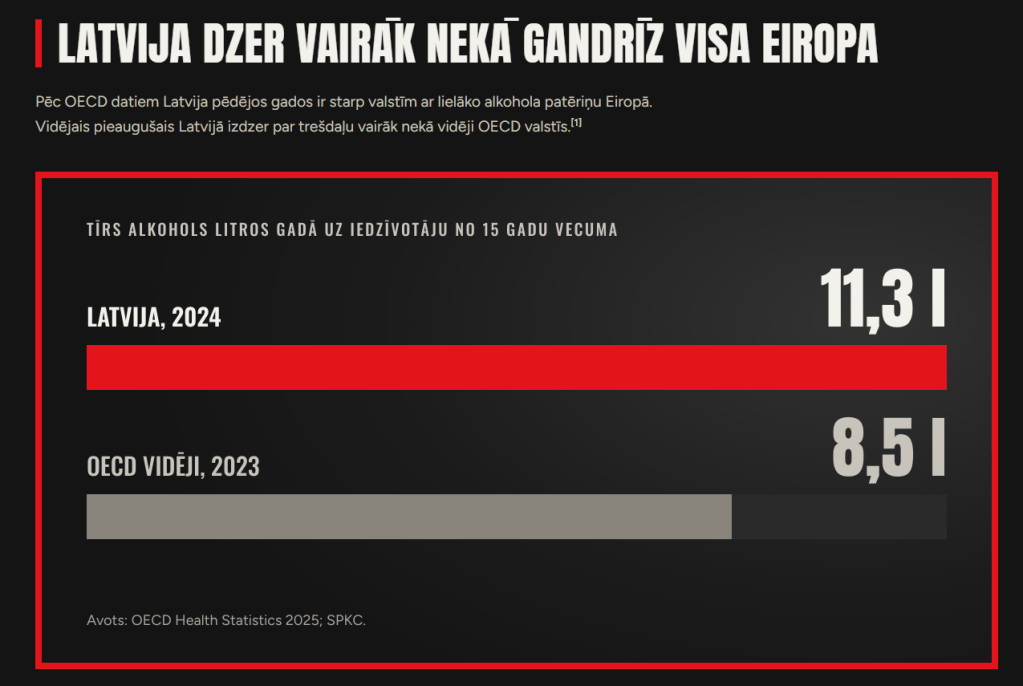
The campaign draws attention to Latvia’s persistently high alcohol consumption. According to the figures presented, registered consumption reached 11.3 litres of pure alcohol per person aged 15 and over in 2024, compared with an OECD average of 8.5 litres in 2023. Latvian men also have a life expectancy almost ten years shorter than women, with alcohol and smoking among the major behavioural risk factors contributing to preventable deaths. The campaign points out that drinking is deeply embedded in everyday situations, from social gatherings and celebrations to activities such as fishing or relaxing after work. This widespread acceptance can make it difficult to recognise alcohol consumption as a health concern.
A central part of the campaign explains how alcohol affects different aspects of men’s health, including sleep, cardiovascular health, brain function, hormones, liver function and cancer risk. It challenges the common belief that alcohol helps people relax and sleep better, explaining how drinking can disrupt sleep quality and contribute to anxiety and fatigue. Particular attention is given to prostate cancer, one of the central concerns of Movember. While the evidence linking alcohol directly to prostate cancer is less conclusive than for several other cancers, the campaign presents research suggesting an association between higher consumption and increased risk. It also emphasises the established links between alcohol and cancers of the mouth, throat, oesophagus, liver and bowel.
Beyond explaining the risks, the campaign demonstrates the potential health benefits of taking a break from alcohol. It refers to a University College London study involving 94 participants who abstained from alcohol for one month, with improvements observed in blood pressure, weight, insulin resistance and liver function markers compared with participants who continued drinking. The campaign website also includes a confidential self-assessment based on the WHO-supported AUDIT-C screening tool, allowing visitors to reflect on their drinking patterns. The message is that meaningful improvements in health can begin relatively quickly, and that even a temporary alcohol-free period can provide an opportunity to reassess established habits.
Importantly, the initiative goes beyond awareness-raising by offering different forms of support. Visitors can explore a 30-day alcohol-free programme, individual counselling, medical treatment options and peer-support groups where men can discuss personal challenges without judgement. The campaign also provides information about professional addiction services and Alcoholics Anonymous. Supported by organisations including the Alliance for Men’s Health, the initiative recognises that alcohol can become a way of coping with stress, loneliness and emotional difficulties. Its broader message is that looking after men’s health involves more than medical check-ups. It also means addressing everyday habits, encouraging open conversations and making support accessible to those who need it.
Find more from Tēvi (Latvia, November 2026)