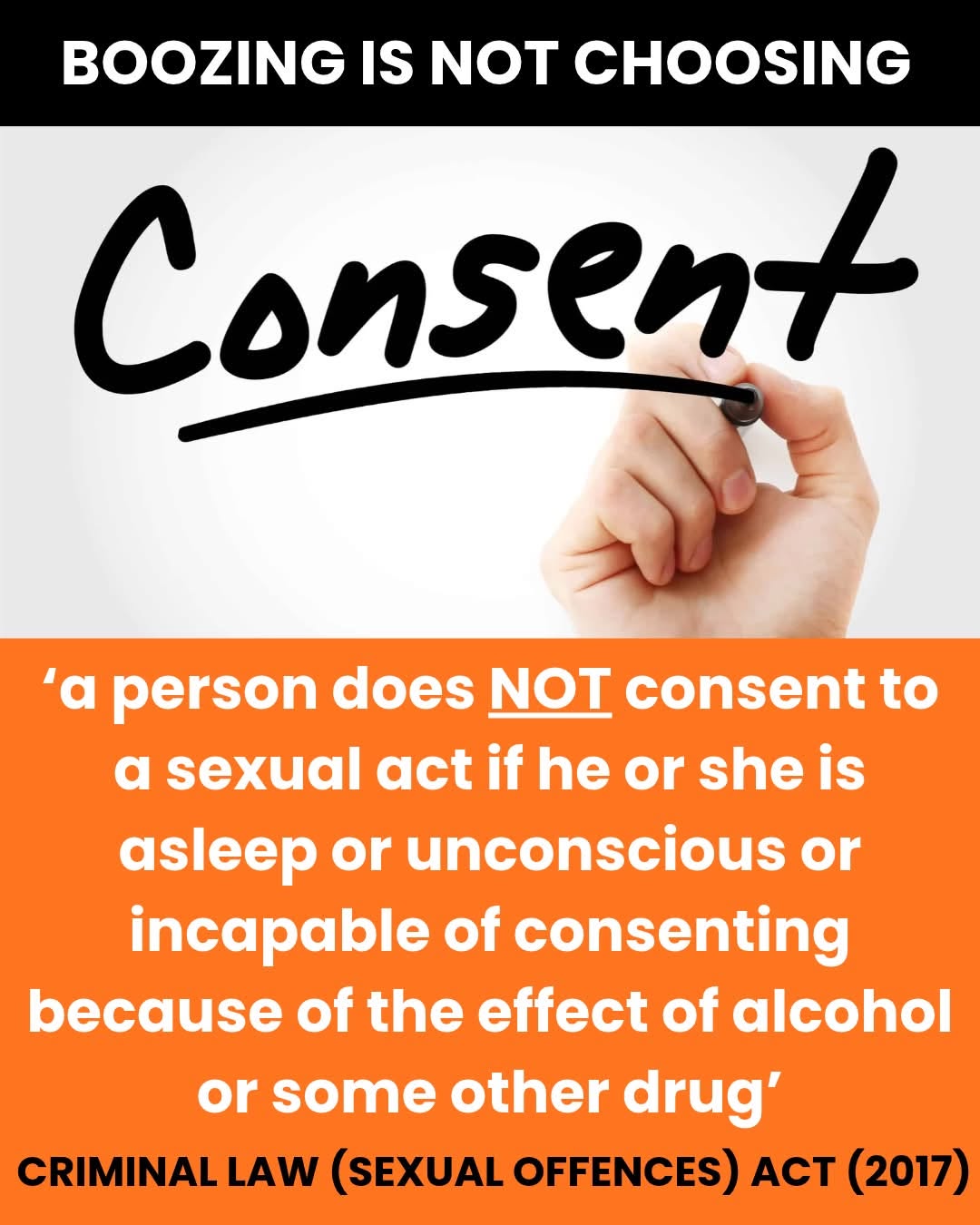
Ireland’s “Boozing Is Not Choosing” campaign launched on 25 November 2026 with a livestream linking events in Drogheda, Monaghan, Maynooth, Cork, Sligo and Letterkenny. Coordinated by Well Ireland through the Building SAFER Communities initiative, the campaign has the backing of more than 80 organisations, including Dublin Rape Crisis Centre, Mental Health Ireland, Pavee Point and Sligo Rovers. In Letterkenny, students from Atlantic Technological University took part in the launch, while the university raised orange flags across all nine of its campuses to mark the start of the 16 Days of Activism against Gender-Based Violence.
The campaign asks people to challenge a familiar form of victim-blaming: treating someone’s decision to drink as evidence that they agreed to sex or share responsibility for an assault. Drinking does not imply consent, and responsibility for sexual violence rests with the perpetrator. The campaign also draws attention to Irish law, which says that consent must be freely and voluntarily given. A person cannot consent if they are asleep, unconscious or incapable of consenting because of alcohol or another drug.
A 2026 survey for Dublin Rape Crisis Centre shows why these messages are still needed. In a nationally representative survey of 1,036 adults, 15% agreed that someone who experiences rape or sexual violence while under the influence of alcohol or drugs is at least partly responsible. Among men aged 18 to 24, 37% held that view. Well Ireland chief executive Paula Leonard warned that fear of being blamed can make people who have experienced sexual assault less willing to report it.
The Irish campaign will share messages on alcohol and consent throughout the 16 Days of Activism, alongside WHO/Europe’s wider campaign on alcohol and violence against women. The two efforts address different parts of prevention: Well Ireland is challenging the assumptions people make about consent and drinking, while WHO/Europe is drawing attention to how alcohol policies, including limits on late-night sales, can help reduce the risk of violence. Both keep responsibility for violence with the person who commits it.
Find more from RTE (Ireland, November 2026)

