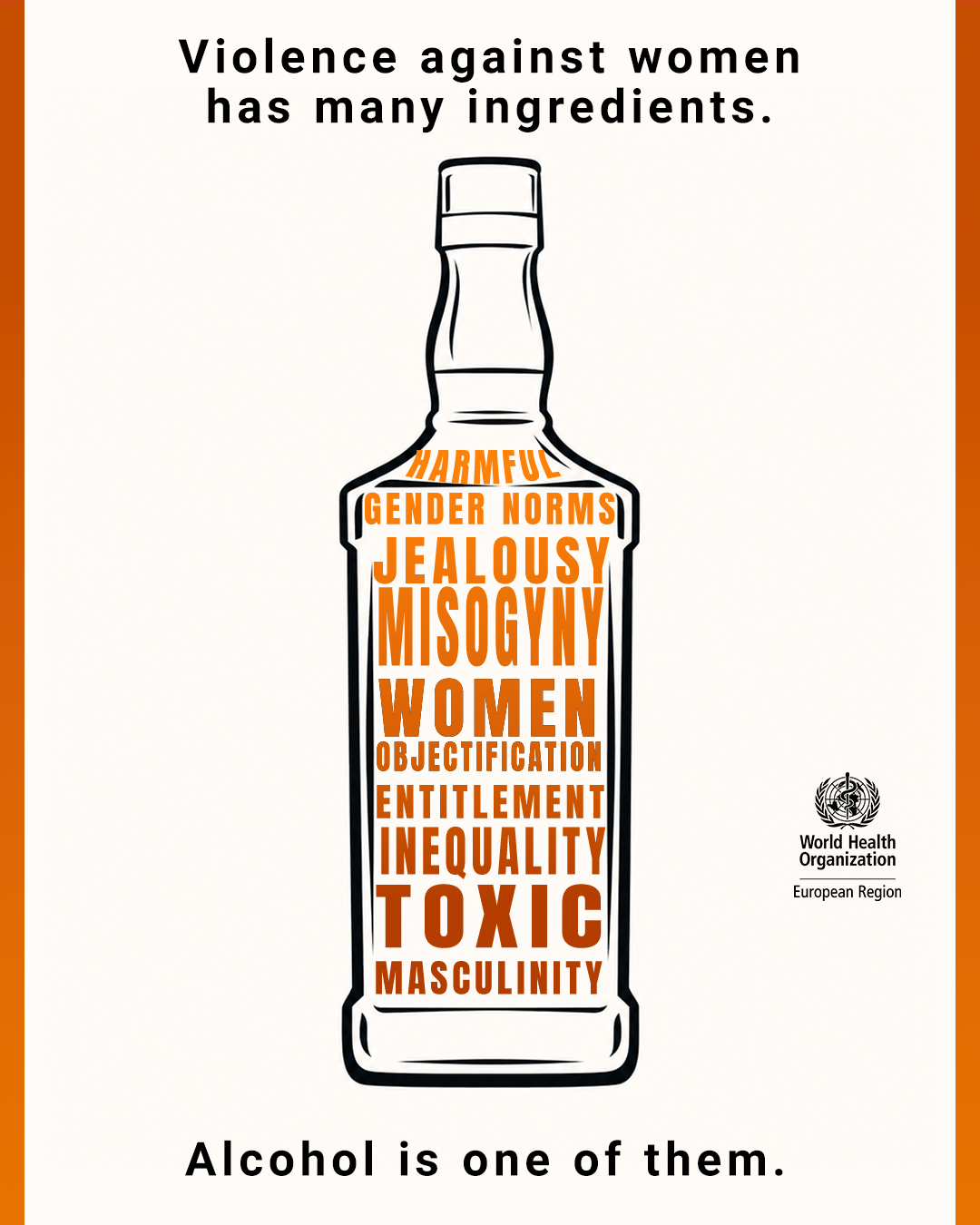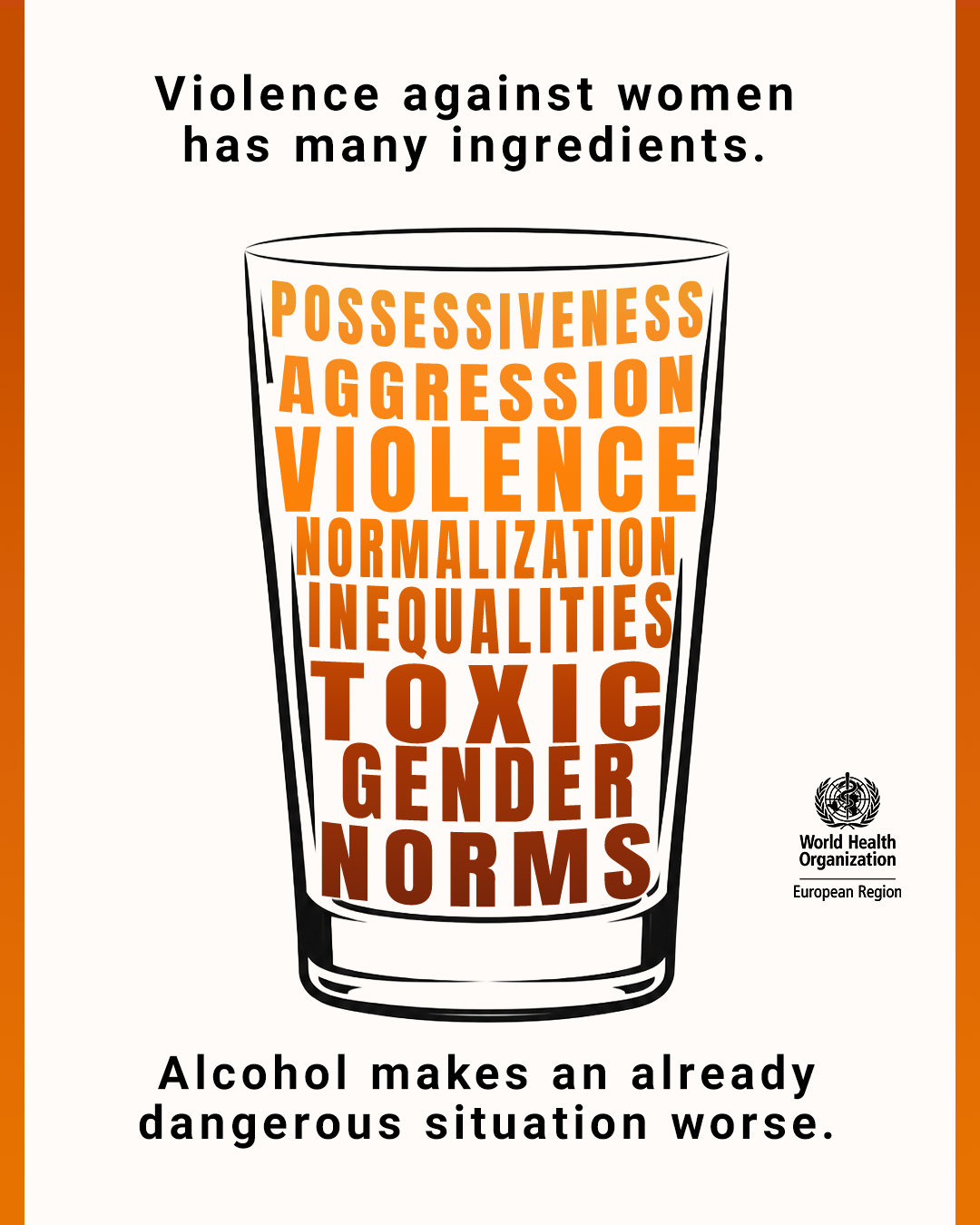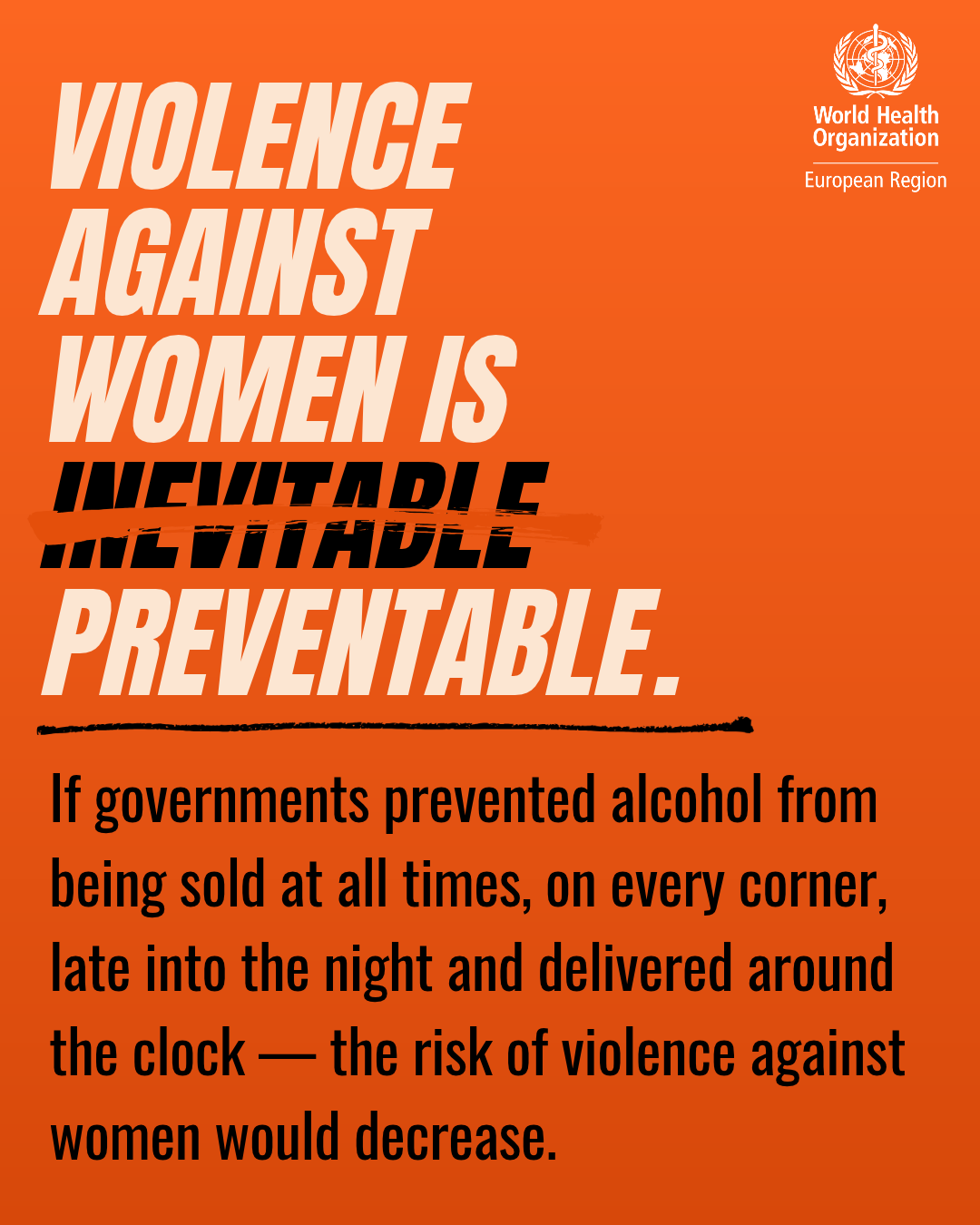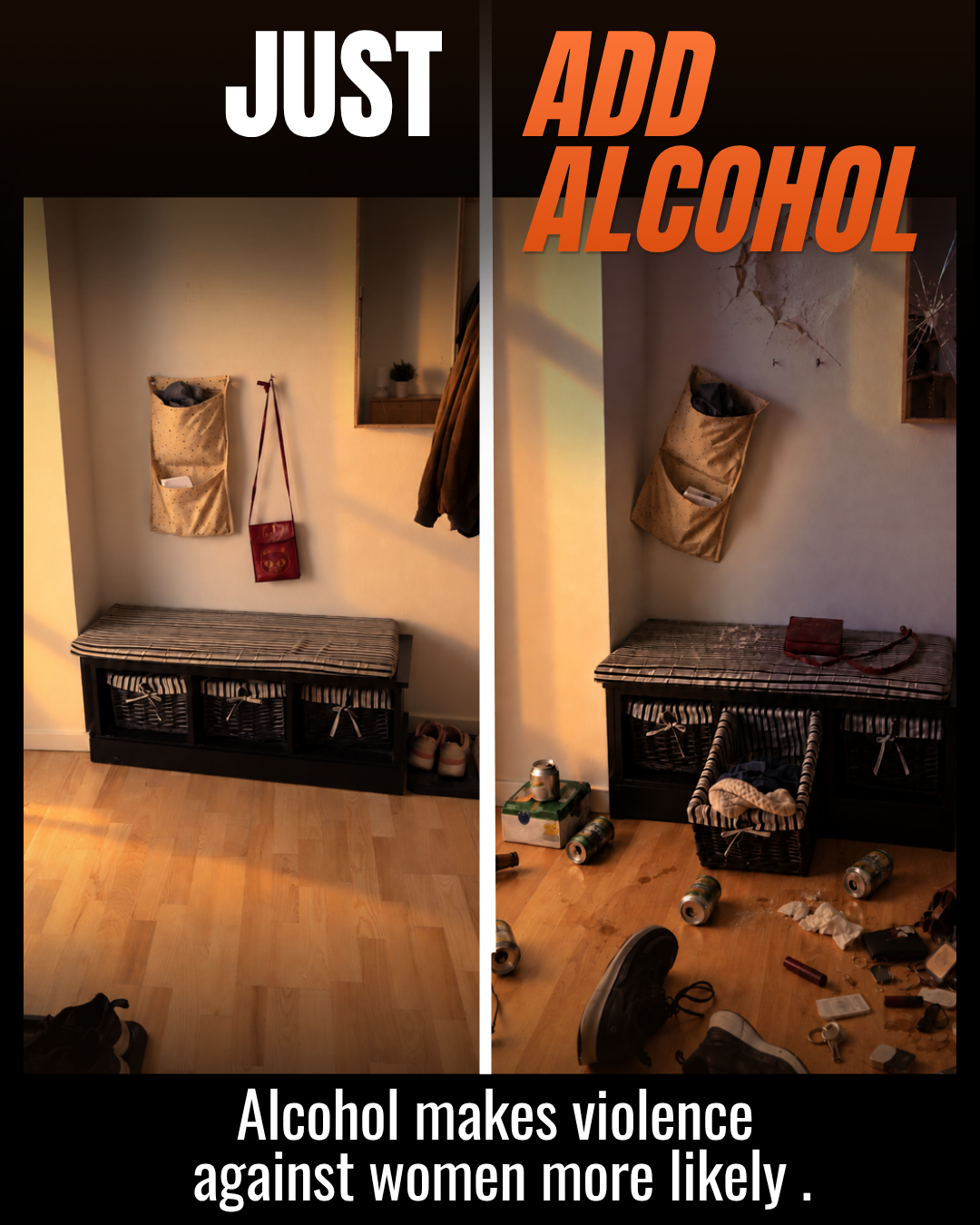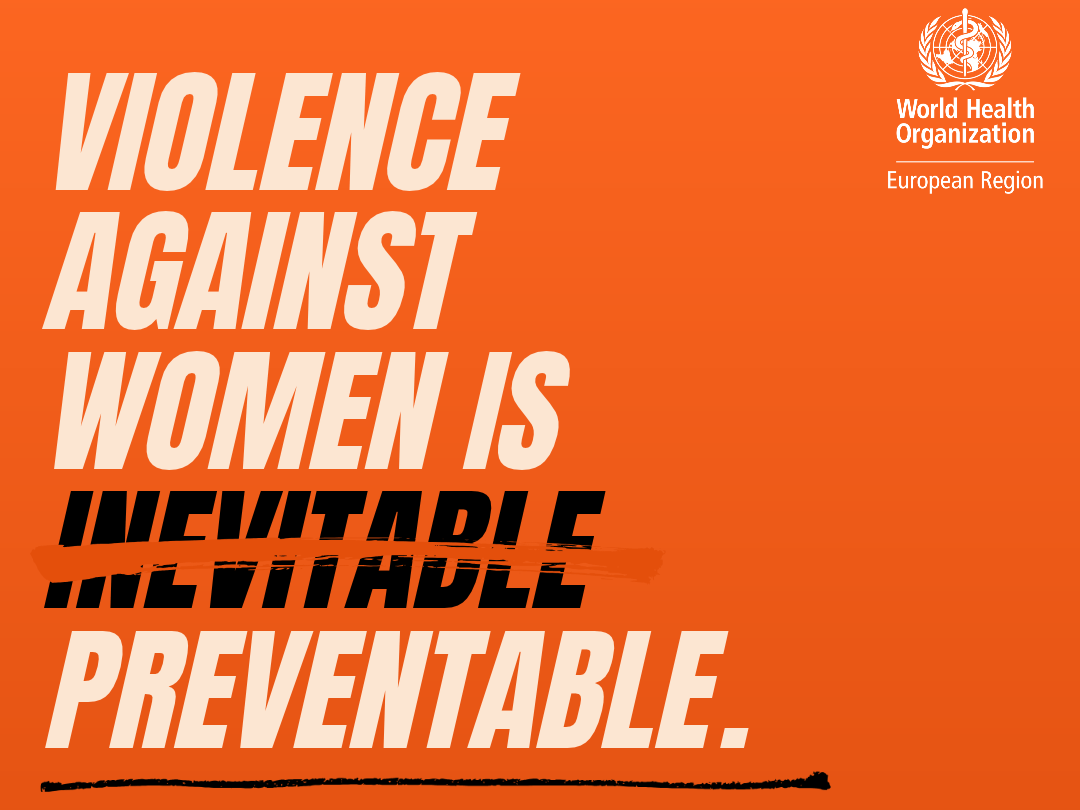
Today, 25 November, the WHO Regional Office for Europe launches a new campaign highlighting the connection between alcohol consumption and violence against women. Running until 10 December as part of the international 16 Days of Activism against Gender-Based Violence, the campaign draws attention to alcohol as an important but often overlooked risk factor. It calls for stronger alcohol policies as part of wider efforts to prevent violence and protect women and girls. Through research findings, personal experiences and practical recommendations, WHO/Europe aims to bring alcohol policy into discussions about gender-based violence prevention.
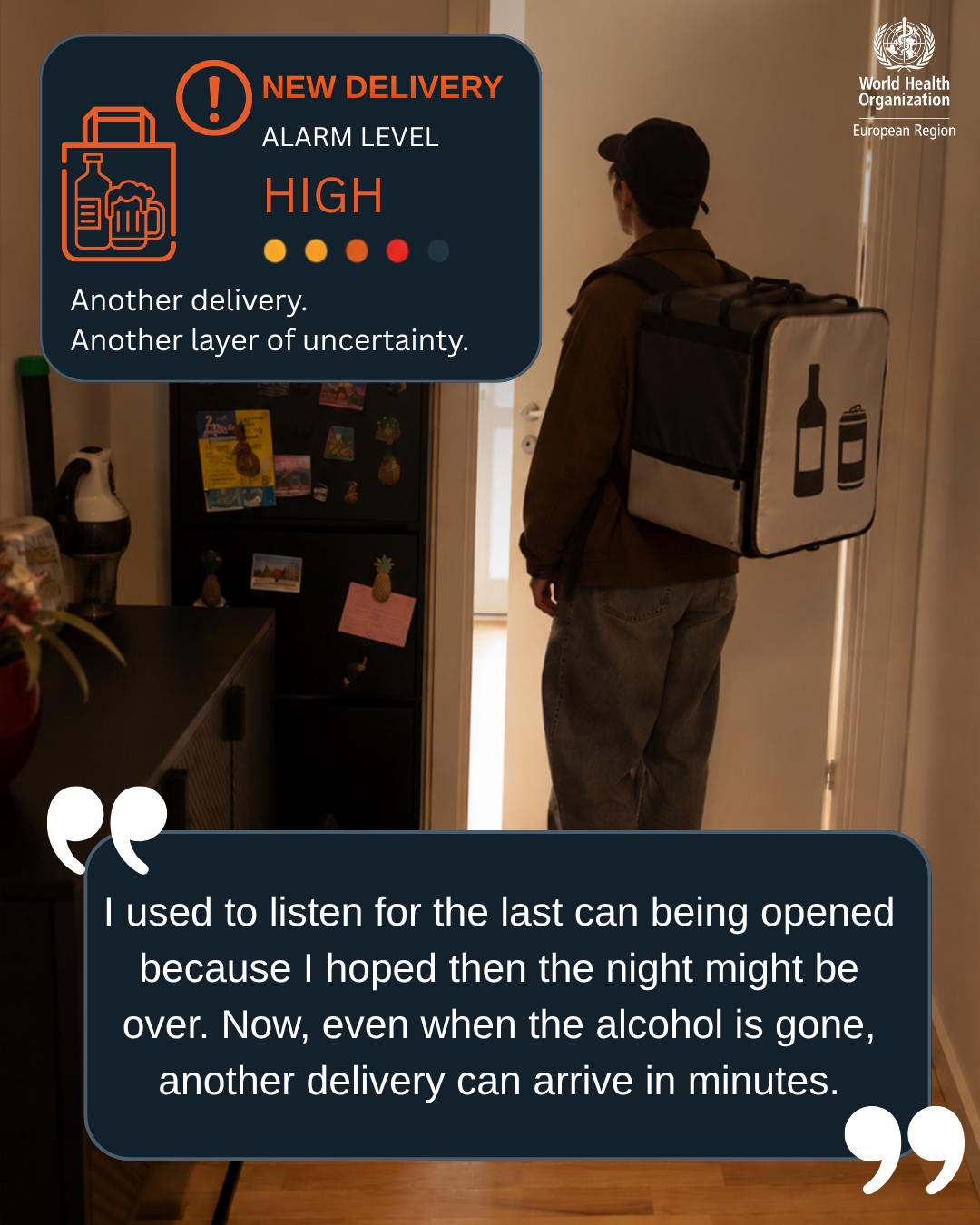
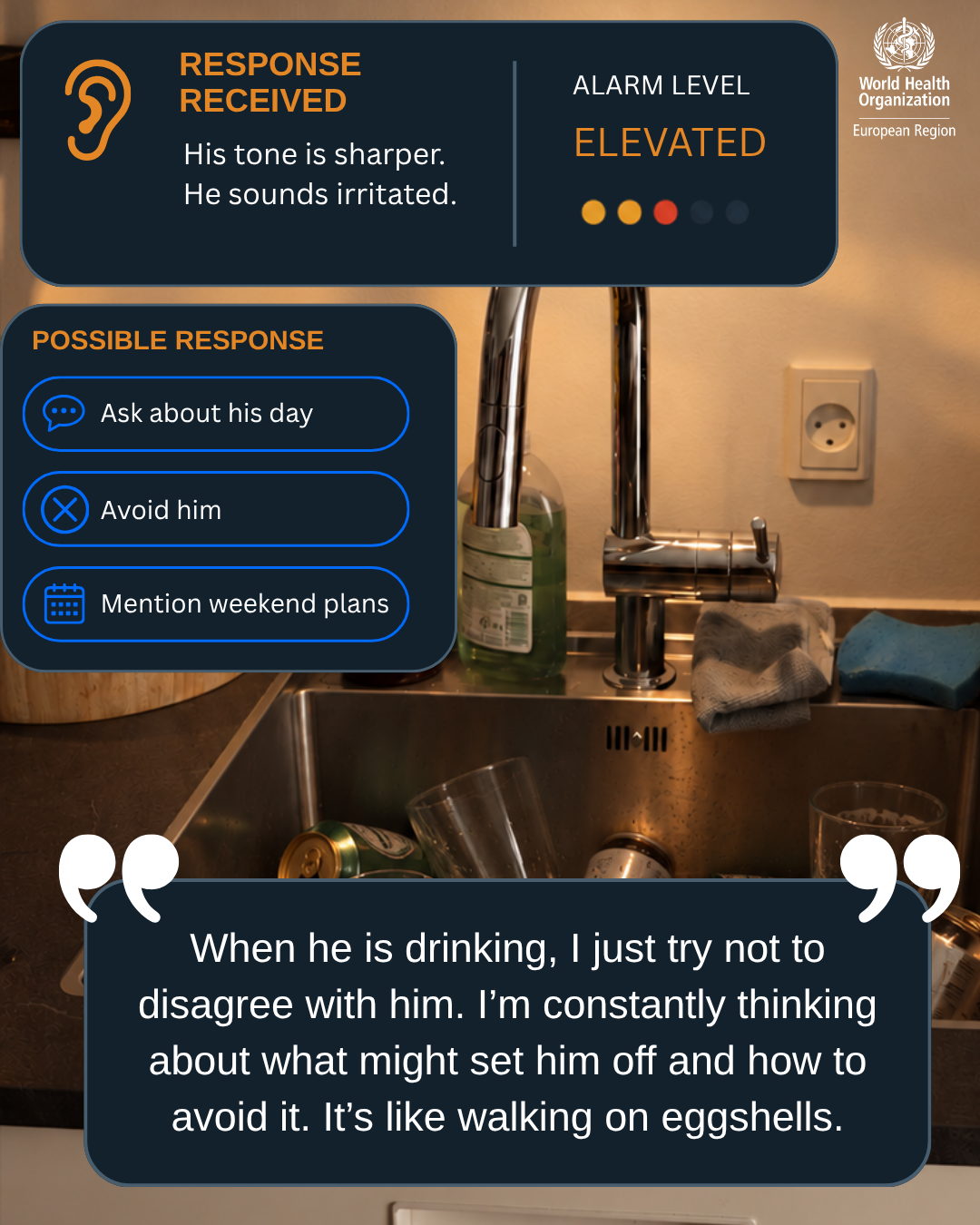
Violence against women remains a widespread public health and human rights concern across Europe. According to WHO/Europe’s Care, courage, change report, nearly 29% of women aged 15–49 who have ever been in a relationship have experienced physical and/or sexual violence from an intimate partner during their lifetime. Around 6.5% have experienced such violence within the past year. Violence takes many forms, including physical assault, sexual violence, intimidation, psychological abuse and coercive control. For women living in abusive relationships, a partner’s alcohol consumption can create additional uncertainty and fear, forcing them to constantly anticipate changes in behaviour and adjust their daily lives to avoid potentially dangerous situations.
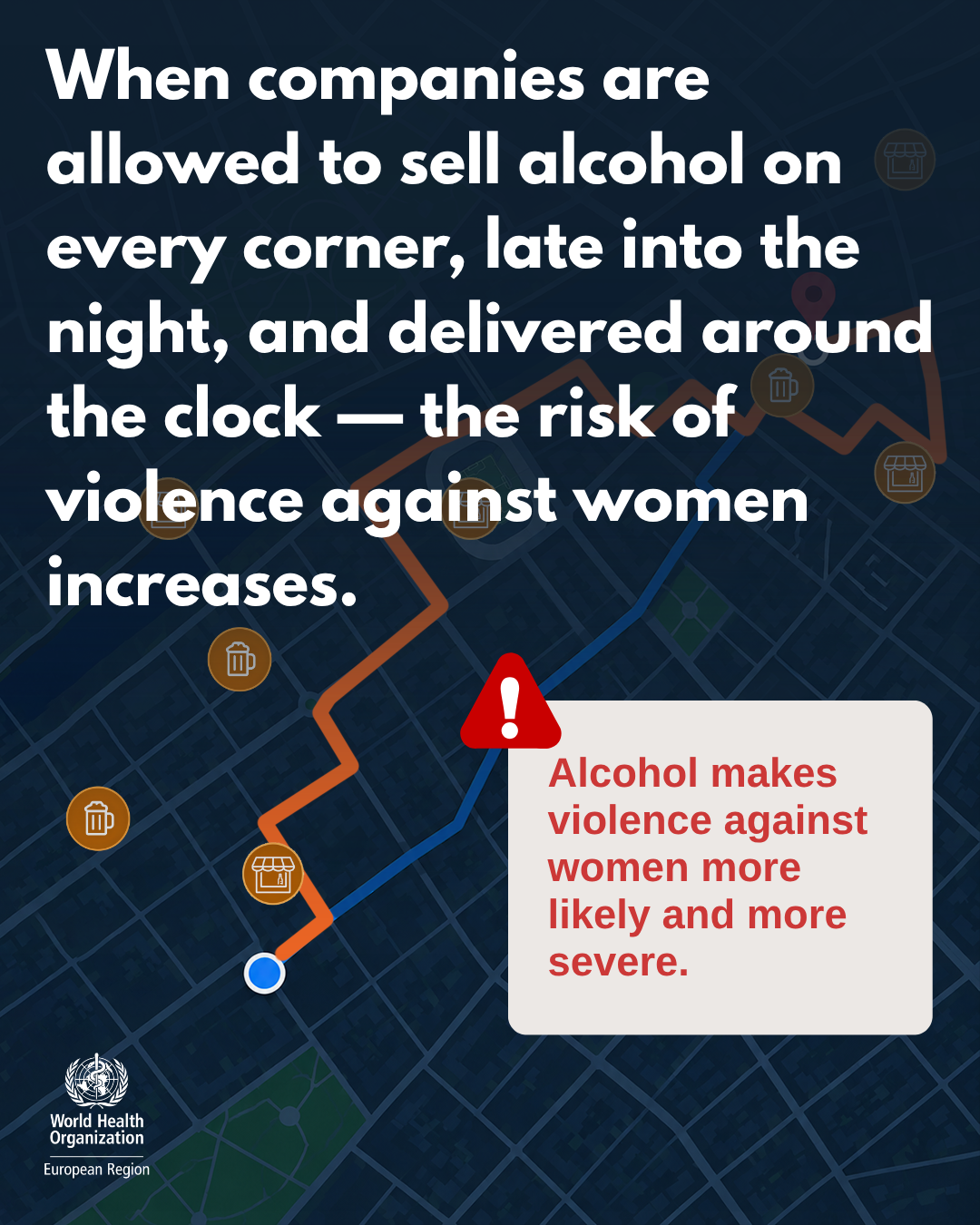
The campaign emphasises an essential distinction: alcohol does not cause violence in isolation, and drinking never excuses violent behaviour. Responsibility always rests with the perpetrator. Violence against women is rooted in gender inequality, unequal power relations and harmful social norms. However, alcohol can increase both the likelihood and severity of violent incidents, particularly within intimate relationships. Its effects on judgement, behaviour and emotional regulation can make already dangerous situations worse. Recognising these connections does not shift responsibility away from perpetrators. Instead, it identifies an additional opportunity to prevent harm through public health interventions.
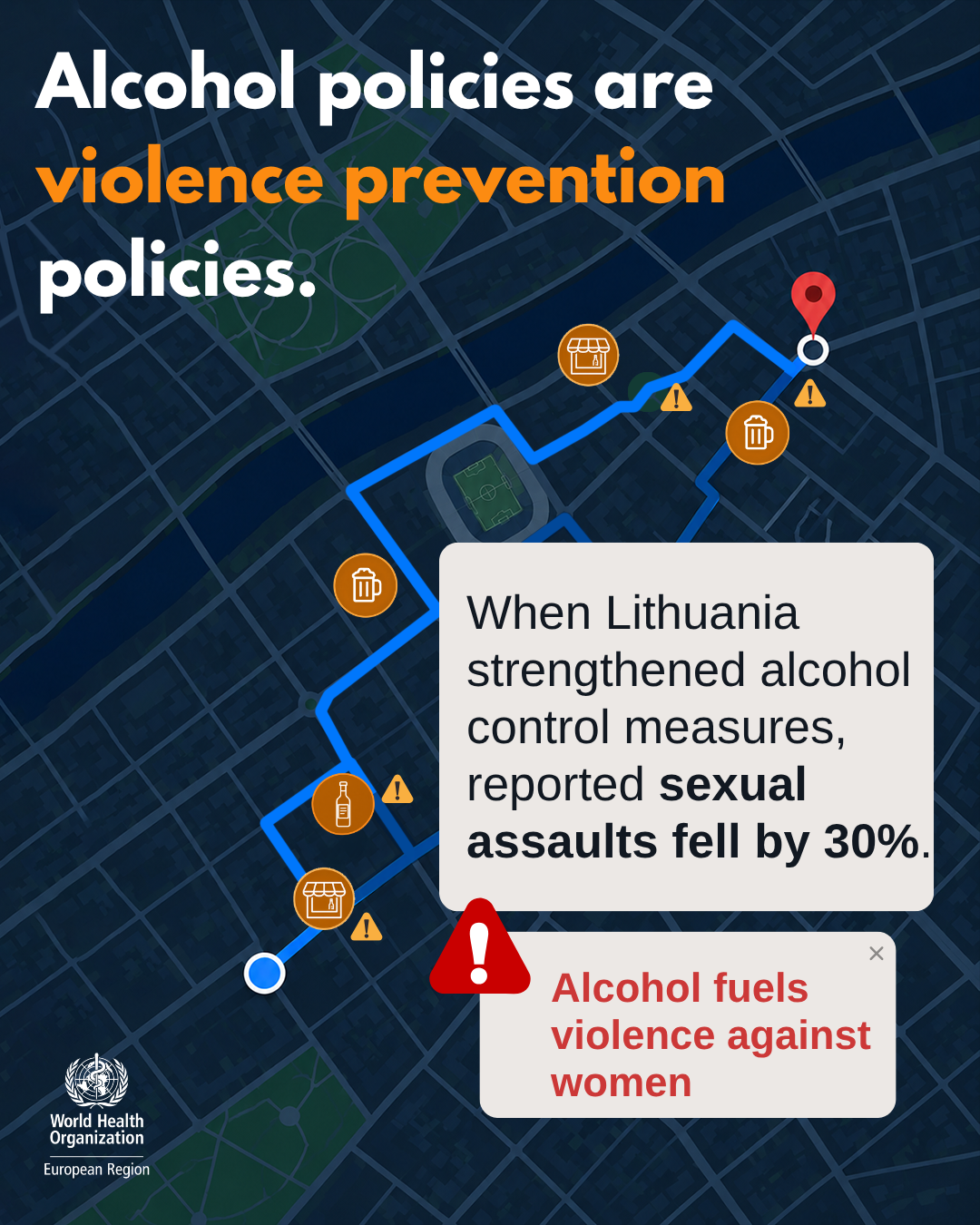
A central focus of the campaign is the preventive potential of alcohol policy. WHO/Europe highlights how alcohol taxation, restrictions on sales hours, limits on outlet density and stronger regulation of alcohol availability can contribute to reducing violence. Research provides encouraging examples. In Lithuania, stronger alcohol control measures, including increased taxation, were associated with an almost 30% reduction in reported sexual assaults. In New South Wales, Australia, restrictions on late-night alcohol sales were associated with a 29% reduction in reported domestic violence. When trading hours were subsequently extended, family violence assaults increased. These findings demonstrate why alcohol policy should also be considered within national strategies addressing violence against women.
An important feature of the WHO/Europe campaign is the involvement of women who have personally experienced violence. Its development brought together international experts in public health, alcohol policy and violence prevention, alongside WHO’s Special Initiative on Violence against Women and Girls. Through two rounds of consultation, 16 women with lived experience reviewed the campaign’s messages and visual materials. Their contributions helped ensure that the campaign accurately reflects the realities of abusive relationships, avoids victim-blaming and consistently places responsibility for violence on perpetrators. This approach connects scientific evidence with women’s experiences and helps communicate a sensitive and complex issue responsibly.
The campaign calls on governments, health professionals, civil society organisations and communities to recognise alcohol policy as part of a comprehensive approach to preventing violence against women. Reducing alcohol-related risks cannot replace action on gender inequality, effective legal protection, survivor-centred support services or efforts to challenge harmful social norms. However, these measures can work together to create safer homes, communities and public spaces. Throughout the 16 Days of Activism, WHO/Europe encourages organisations and individuals to share the campaign materials, raise awareness and support policies that reduce preventable harm. Addressing alcohol’s contribution to violence is an important part of building a society in which women and girls can live free from violence.
Find more from WHO Europe (November 2026) and from campaign materials