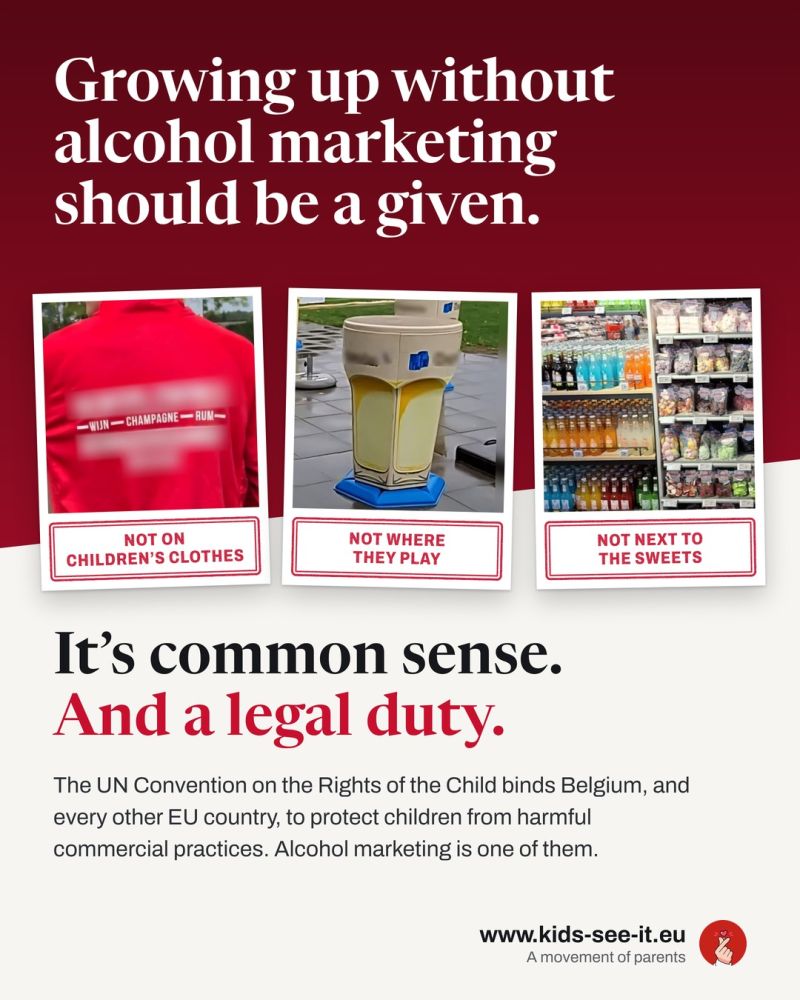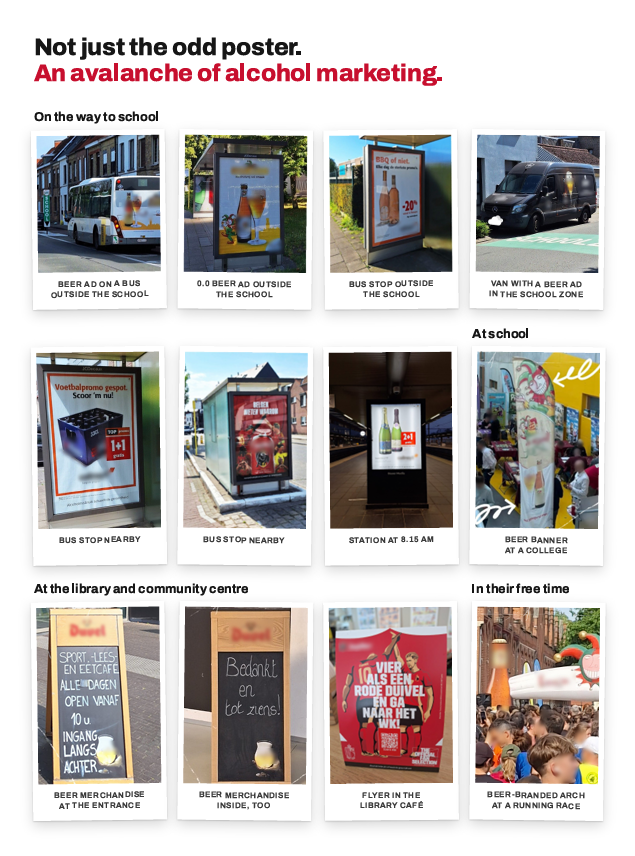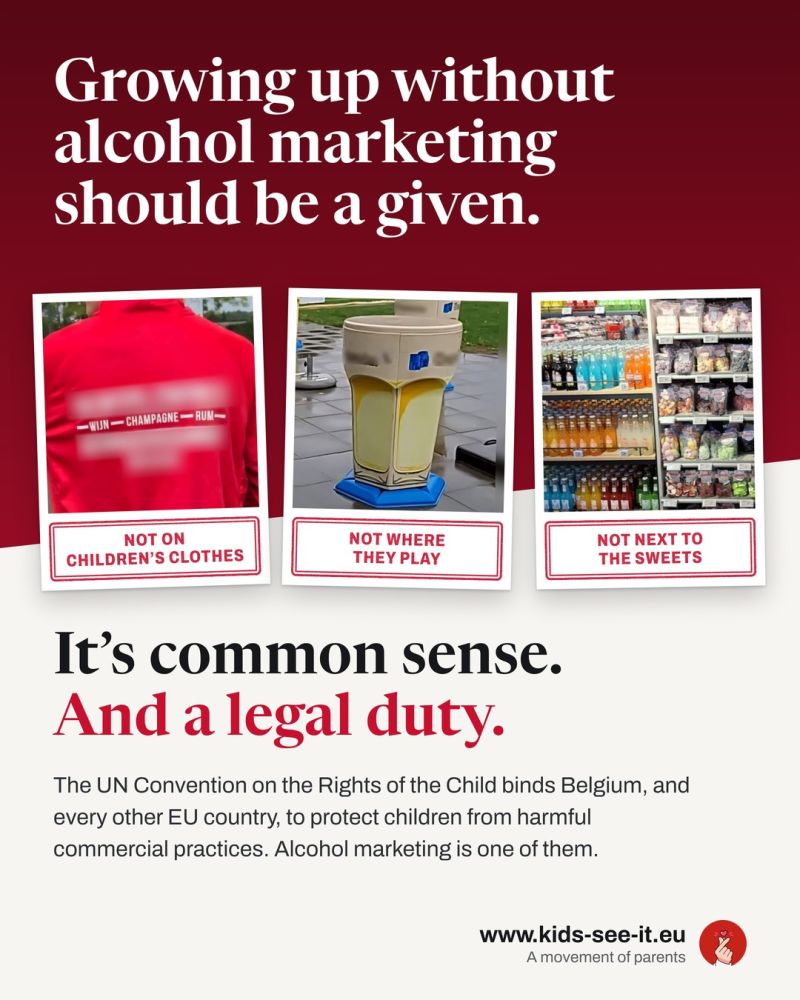
A parent-led campaign in Belgium is challenging the widespread presence of alcohol marketing in children’s everyday lives. Called “Growing up without alcohol marketing”, the initiative highlights how children encounter alcohol promotion in places where they should be able to grow up, play and learn without commercial pressure. From alcohol-related messages printed on children’s sportswear to advertising near playgrounds, schools and sports clubs, the campaign documents practices that remain permitted under Belgian regulations. Its central demand is clear: Belgium should introduce legislation to progressively phase out alcohol marketing, following the approach taken with tobacco, starting with marketing that reaches or appeals to children.
The campaign draws attention to how alcohol marketing extends far beyond traditional advertising. Children encounter alcohol brands through sports sponsorship, social media, influencers, product packaging, merchandise and even alcohol-free products that carry familiar branding. Marketing repeatedly associates alcohol with friendship, entertainment, sporting success and positive experiences, helping to establish alcohol as a normal part of everyday life. The campaign argues that children cannot reasonably be expected to recognise or resist these commercial influences, particularly in digital environments where advertising is increasingly personalised and difficult for parents to monitor.
Research provides strong grounds for concern. Systematic reviews of longitudinal studies have consistently found that greater exposure to alcohol marketing is associated with earlier drinking initiation and increased alcohol consumption among young people. The Belgian campaign also highlights the serious consequences of underage drinking. According to a nationwide study published in 2025, approximately 2,250 adolescents aged 12 to 17 receive emergency care for acute alcohol intoxication in Belgium annually, an average of more than six every day. The campaign emphasises that protecting children from alcohol marketing is both a public health responsibility and a matter of children’s rights.
The initiative also challenges Belgium’s existing approach to regulating alcohol advertising, particularly its reliance on industry self-regulation. Campaign organisers argue that proposed new rules remain insufficient because they leave significant loopholes for sponsorship, alcohol-free brand extensions and advertising that reaches children as part of a broader audience. They are calling for comprehensive restrictions covering sports, public spaces, retail environments, digital platforms and product promotion. Their position has received support from VAD, the Flemish Expertise Centre for Alcohol and Other Drugs. The campaign also points to public support for stronger measures, citing Belgian survey findings showing that more than 70% of people in Flanders consider a ban on alcohol advertising important.
A particularly important feature of the campaign is its invitation for parents to document alcohol marketing in their children’s surroundings. Parents can submit photographs of advertising they encounter, helping to build a clearer picture of children’s exposure. Where marketing breaches existing rules, organisers intend to submit complaints to Belgium’s advertising ethics body. Where it remains legal, the examples will be used to demonstrate to policymakers why stronger legislation is needed. The campaign also encourages parents to contact elected representatives and support changes at European, federal, regional and local levels. Its message extends well beyond Belgium: children’s right to a healthy environment should take priority over the commercial interests of the alcohol industry.
Find more from Growing up without alcohol marketing (Belgium, November 2026)