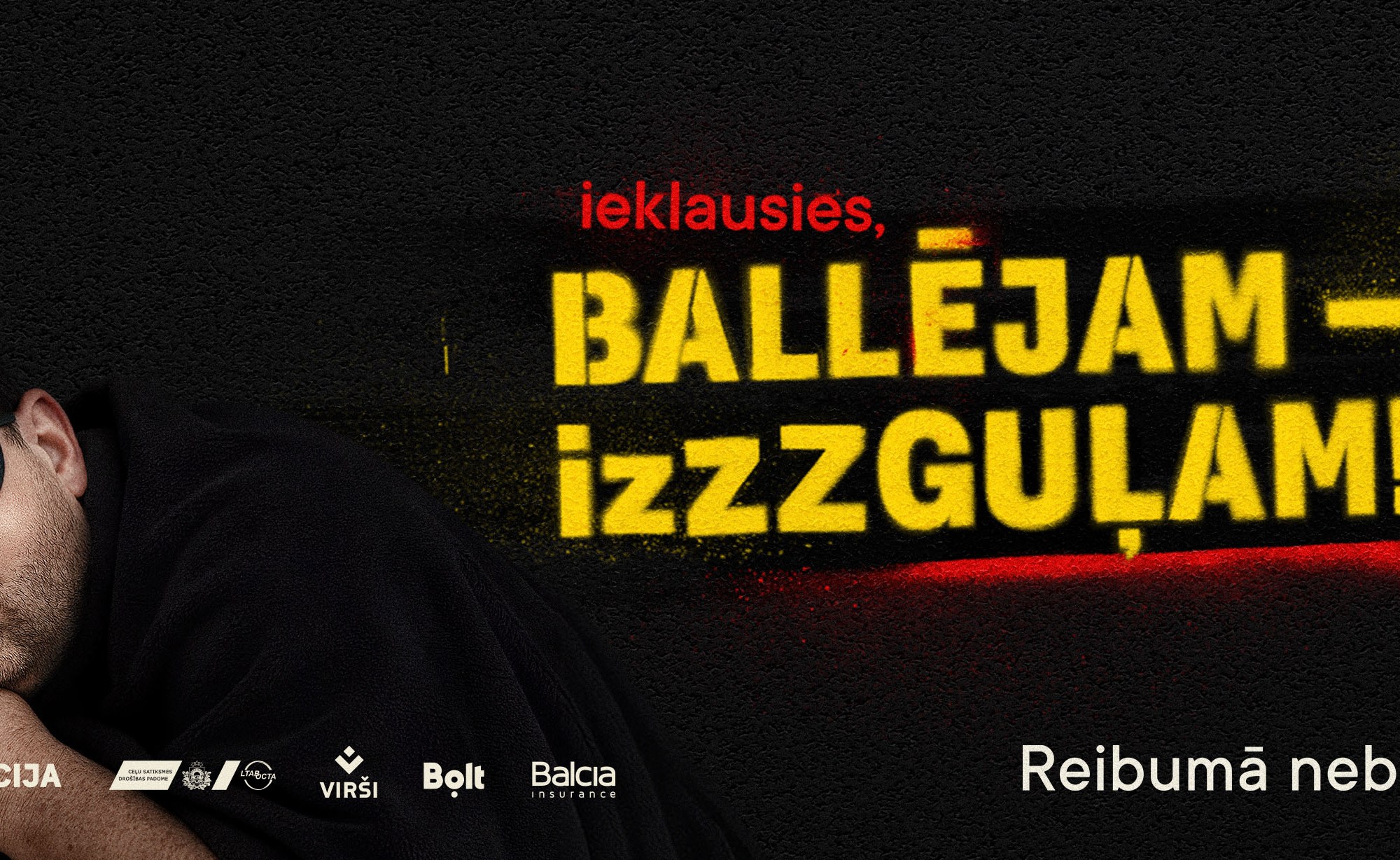
Latvia’s Road Traffic Safety Directorate (CSDD) used the 2026 Midsummer season to renew its long-running effort against drink-driving with the campaign “Ballējam – izguļam” (“We party, we sleep it off”). Launched ahead of the Jāņi celebrations in June, when alcohol consumption and holiday travel traditionally increase, the campaign urged people not only to avoid driving after drinking themselves, but also to intervene when friends or relatives were preparing to do so. Its central message was simple: road safety is a shared responsibility, and preventing someone from driving drunk can be the action that prevents a death.
The campaign was backed by figures showing why the issue remains urgent. According to CSDD, 98 of 464 road crashes involving injuries recorded in 2026 at the time of the campaign, 21.1%, involved alcohol as a contributing factor. Nine of the 34 people who had died in road crashes during the period were killed in crashes involving an intoxicated person. Police data also showed that 2,727 proceedings for drink-driving were initiated in 2025, including 1,960 criminal cases, while another 1,057 proceedings had already been started during the first five months of 2026. Alcohol-related risk was not limited to car drivers, with hundreds of intoxicated cyclists, e-scooter riders and moped riders also recorded by police.
An important element of “Ballējam – izguļam” was its focus on the behaviour of people around a potential drink-driver. Criminology and forensic psychology lecturer Rūta Treija stressed that alcohol reduces a person’s ability to assess risk precisely when they are deciding whether to drive, meaning that relying on individual judgement alone is not enough. The campaign therefore challenged the reluctance to “interfere” or report someone, reframing intervention as protection rather than betrayal. This was reinforced through real-life stories and Treija’s lecture-performance “DZĒRĀJŠOFERĪBA. Fakti, ko nevar nodzert”, which examined what remains after a drunk-driving incident and the consequences borne by families and other road users.
Although the campaign was designed around Latvia’s Jāņi celebrations on 23 and 24 June, its message remains relevant well beyond the holiday period. As of 7 August 2026, the statistics highlighted by CSDD illustrate a continuing road-safety problem rather than a short seasonal spike. The campaign also widened the discussion by drawing attention to fatigue, with partner Balcia reporting that more than 60% of surveyed Latvian drivers had driven while severely tired during the previous year. Together, these messages make “Ballējam – izguļam” more than a Midsummer warning: it is an attempt to strengthen the social norm that neither alcohol nor serious fatigue should be treated as compatible with driving.
Find more from Latvia’s Road Traffic Safety Directorate (Latvia, June 2026)

