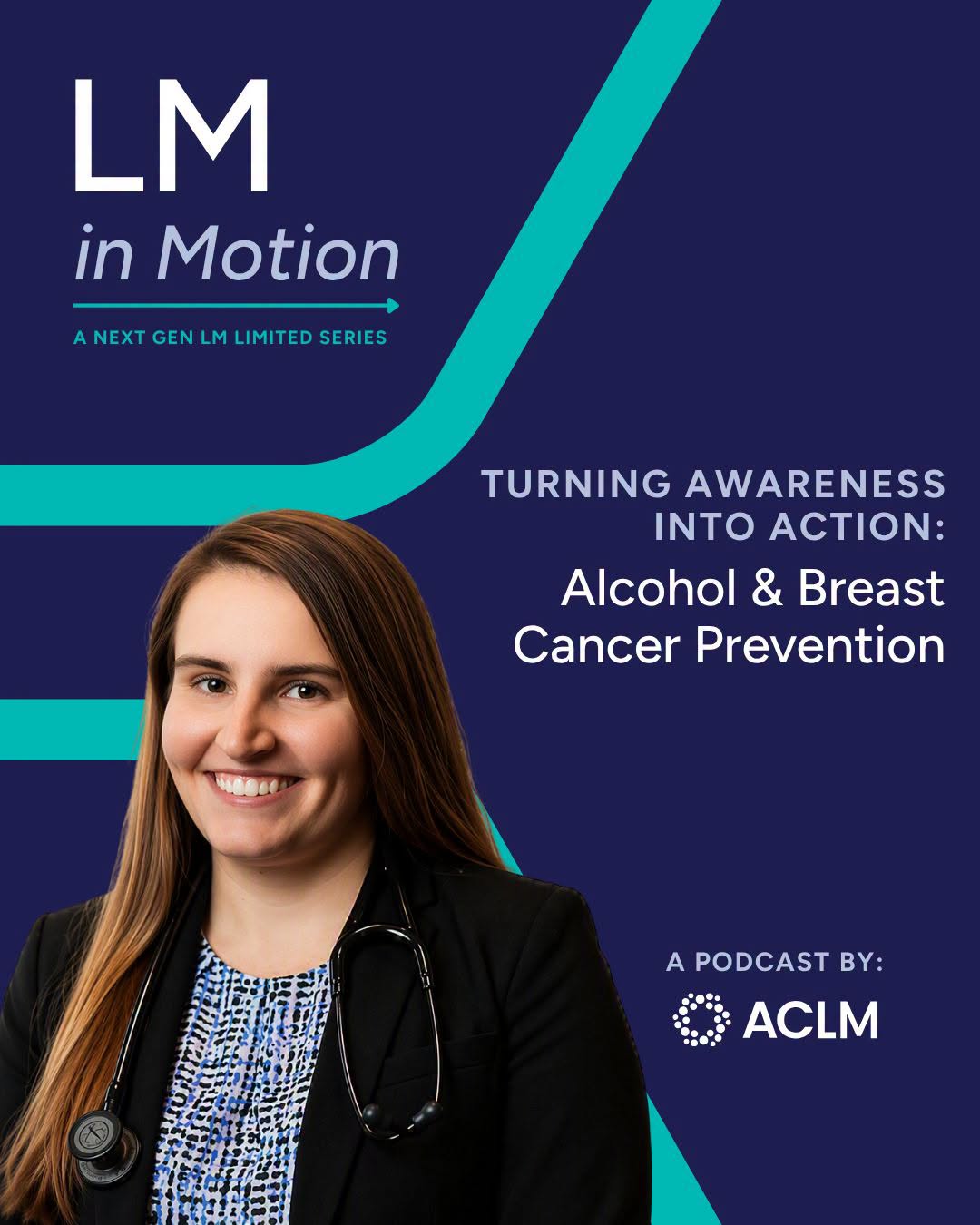
Alcohol is an established cause of breast cancer, yet many people remain unaware of the connection. In the first episode of the American College of Lifestyle Medicine’s LM in Motion series, Dr Elizabeth Farkouh discusses how this information gap inspired her to create a practical educational intervention for patients. She explains that people should be able to make informed health decisions, but this is impossible when important information about alcohol-related cancer risk is missing from routine health communication.
The project began while Dr Farkouh was a medical student at the Mayo Clinic. After seeing how surprised patients were to learn about the alcohol and cancer link, she narrowed her focus to breast cancer, found clinical mentors and secured a small scholarship to develop a brief educational video. That initial support helped the project gain momentum and later opened the way for departmental funding and a randomized controlled trial. The study is now examining whether the intervention improves knowledge, changes intentions regarding alcohol use and ultimately influences drinking behaviour.
One of the most important lessons from the initiative concerns how health information is communicated. Patients did not want to feel judged or lectured. They wanted clear information presented in a way that supported and empowered them to make healthier choices. The project therefore shows that effective alcohol and cancer communication is not only about providing accurate facts, but also about presenting them respectfully and in a form that patients can understand and use.
Dr Farkouh believes the intervention could be adapted for other healthcare settings and expanded to cover additional alcohol-related cancers. Her experience also offers a broader message for clinicians and trainees: meaningful prevention work can begin with a clearly identified gap, a focused idea, supportive collaborators and relatively simple tools. Turning awareness into action does not always require a large programme at the outset. It can begin by ensuring that patients receive information they have a right to know.
Find more from American College of Lifestyle Medicine (USA, July 2026)

