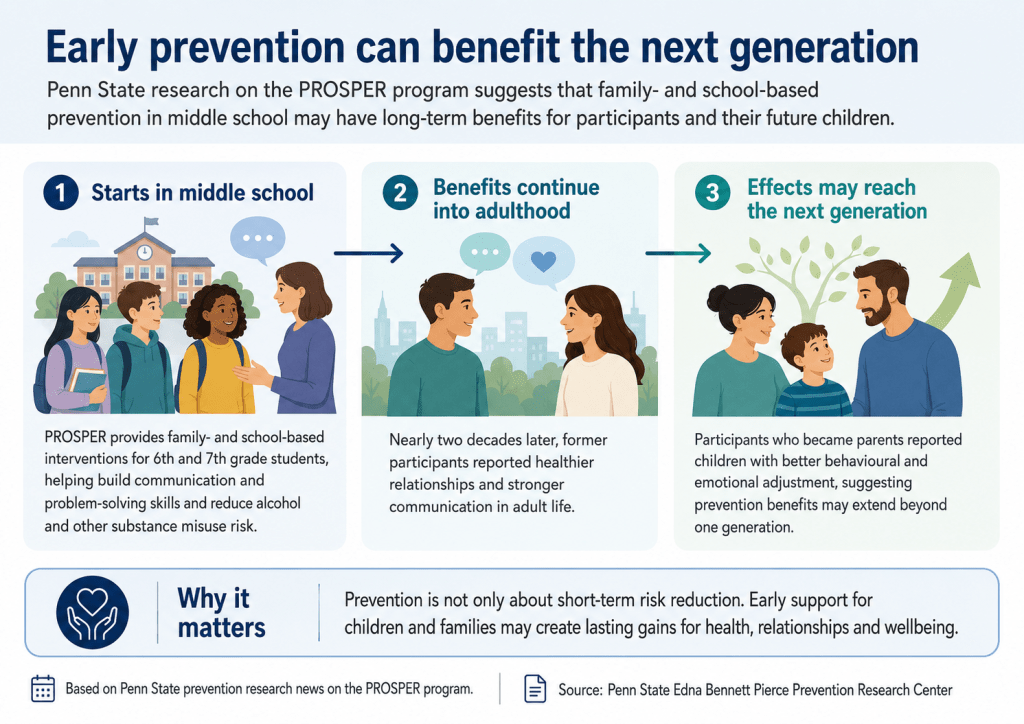
A new Penn State study offers an unusually long view of substance-use prevention. Researchers followed people who participated in the PROSPER programme as middle-school students nearly two decades ago.
The programme combines family and school interventions designed to strengthen communication, problem-solving and other protective skills while reducing alcohol and other substance misuse. Participants later reported healthier communication in their adult relationships.
The findings also suggest that benefits may extend to their children. Participants who had become parents reported that their children showed better behavioural and emotional adjustment, indicating a possible intergenerational effect.
Prevention is often expected to produce quick and easily measurable results. This study points to a broader perspective: investing in families, relationships and social skills during adolescence may influence health and wellbeing for many years, potentially benefiting people who were not yet born when the intervention began.
Find more from Penn State College of Health and Human Development (USA, July 2026)