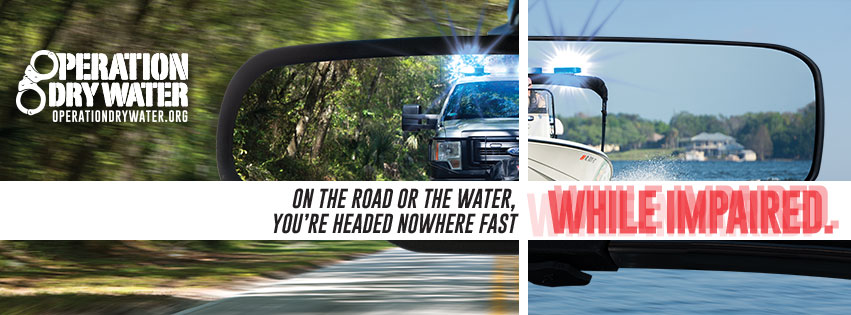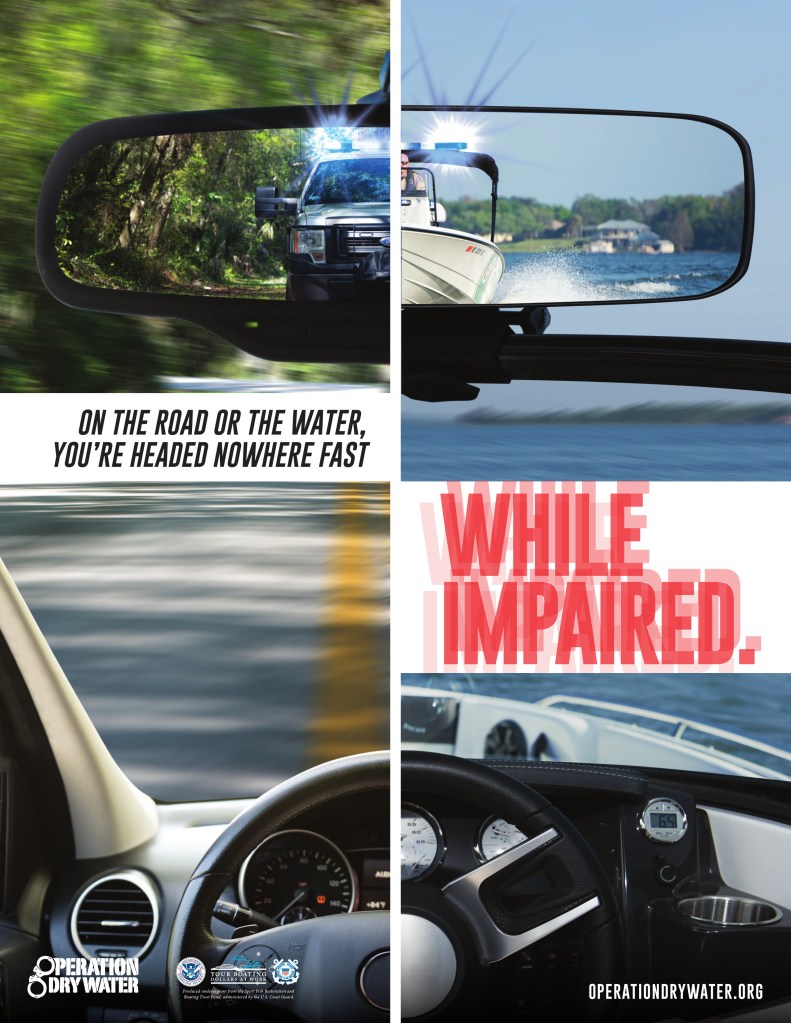
Operation Dry Water, the United States’ national campaign against boating under the influence, is holding its annual heightened awareness and enforcement weekend from 3 to 5 July 2026. The campaign aims to prevent alcohol and drug-related boating incidents and deaths by combining public education with visible enforcement. It is coordinated by the National Association of State Boating Law Administrators (NASBLA), in partnership with the US Coast Guard and local, state and federal law enforcement agencies.
Officers from across all 56 US states, territories and trusts are expected to participate in this year’s campaign weekend. Operation Dry Water was established in 2009 and has since become a major national boating safety initiative. During its annual three-day enforcement periods, officers have removed 7,954 impaired operators from waterways and made contact with more than 3.3 million boaters. In 2025 alone, 451 agencies and 7,311 officers participated, contacting 232,694 boaters and making 501 arrests for boating under the influence.
The campaign stresses that alcohol can impair judgement, balance, vision and reaction time, while also increasing fatigue and vulnerability to cold-water immersion. Conditions commonly experienced on boats, including sun, wind, noise, vibration and motion, can intensify the effects of alcohol, drugs and some medications. Alcohol also creates risks for passengers, as intoxication can contribute to slips, falls overboard and other dangerous incidents. According to US Coast Guard data for 2024, alcohol was the leading known contributing factor in fatal recreational boating incidents and was associated with 20% of deaths where the primary cause was known.
Although the enforcement weekend is held around the Fourth of July, when boating activity and alcohol use typically increase, Operation Dry Water is active throughout the year. Its broader goal is to challenge the cultural acceptance of drinking while boating and make sober operation the expected norm. The campaign also highlights wider safety measures, including wearing life jackets and completing boating safety education. In 2024, 87% of people who drowned in recreational boating incidents were not wearing a life jacket, while 69% of deaths in cases with known operator training occurred on boats operated by someone without formal boating safety education.
Find more from Operation Dry Water (USA, July 2026)