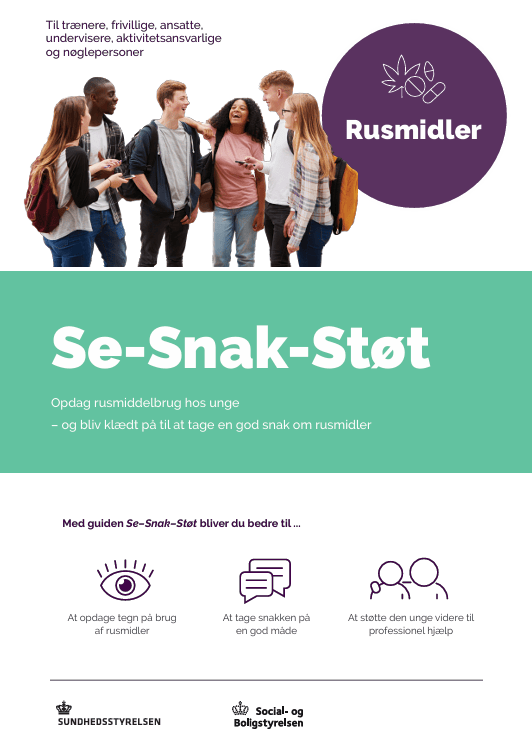
In February 2026, the Danish Health Authority (Sundhedsstyrelsen) and the Danish Authority of Social Services and Housing (Social- og Boligstyrelsen) introduced a collection of practical resources to help adults working in sports clubs, cultural activities and youth organisations recognise and respond to substance use among young people. The initiative acknowledges that coaches, instructors and volunteers may be among the first to notice changes in a young person’s behaviour or wellbeing.
Adults involved in recreational activities often develop trusting relationships with young people, placing them in a position to recognise potential problems. However, knowing how to approach a young person, what questions to ask and when to involve others can be challenging. The Danish materials aim to reduce this uncertainty by providing clear guidance on how to recognise warning signs, start supportive conversations and help young people access appropriate assistance.
At the centre of the initiative is Se-Snak-Støt (See, Talk, Support), a practical guide for identifying concerns and responding constructively. The resource package also includes step-by-step guidance for developing organisational substance use policies, programmes for staff and volunteer meetings, dialogue cards for discussing realistic situations and an Action Card explaining whom to contact when concerns arise. Together, these tools encourage organisations to establish shared procedures so that individual volunteers are not left to handle difficult situations alone.
The materials were developed in cooperation with organisations representing sports, culture, municipalities and voluntary activities, including the Danish Sports Confederation (DIF), DGI and the Danish Youth School Association. They address concerns related to alcohol and other drugs, including substances such as opioids, which can have particularly serious consequences. An important principle is that volunteers are not expected to become substance use specialists, but should know how to respond appropriately and involve professionals when necessary.
The initiative highlights the potential of community organisations as important partners in prevention and early intervention. By providing practical resources for adults who regularly interact with young people outside schools and families, Denmark is helping create environments where concerns about substance use can be recognised and addressed earlier. The materials are available in Danish and offer an approach that could also be useful for sports clubs and youth organisations in other countries.
Source: Danish Health Authority (Sundhedsstyrelsen), 3 February 2026.