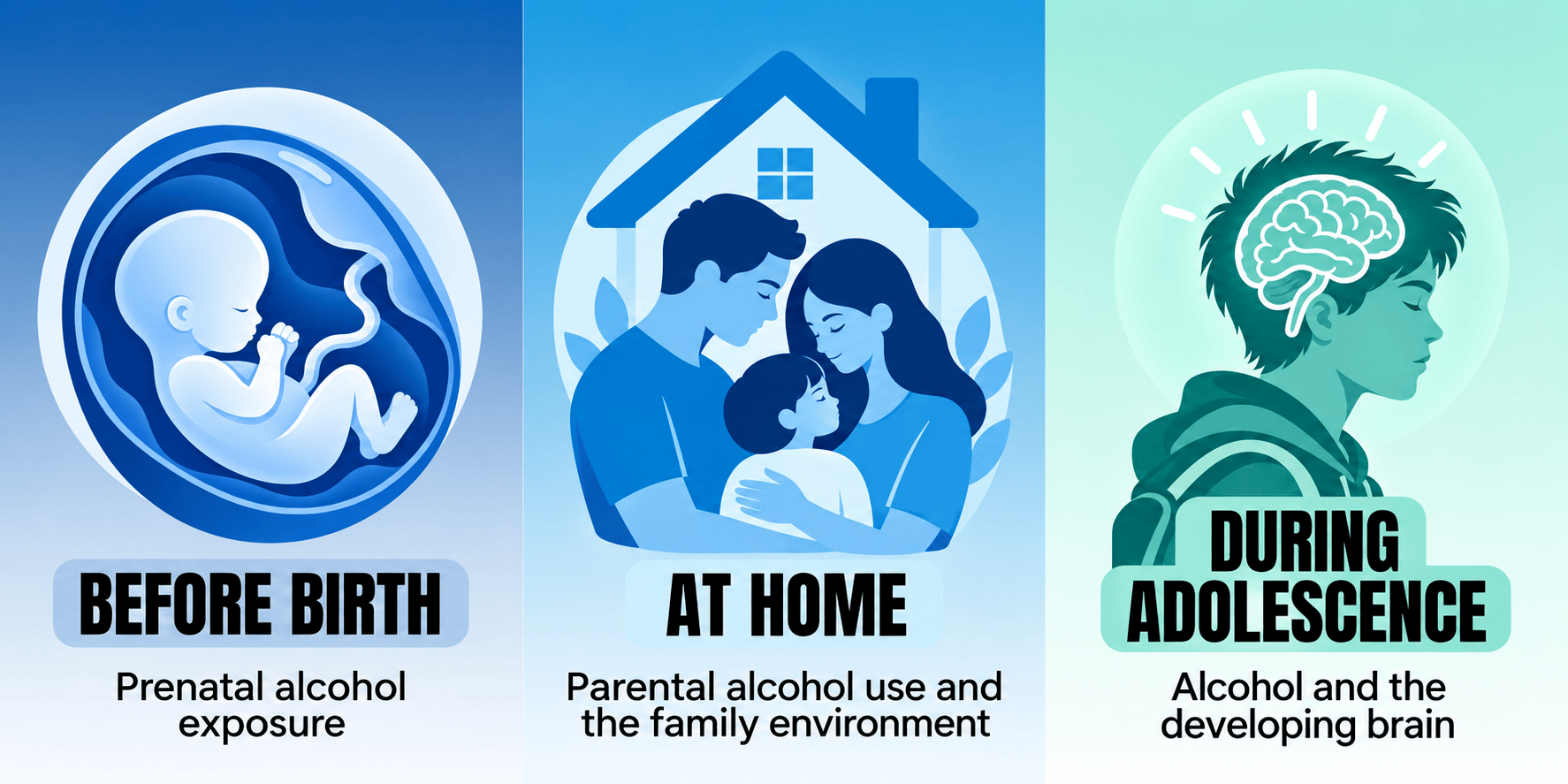
Alcohol-related harm to children is not limited to underage drinking. That is the central message of a new article published by the European Academy of Paediatrics on October 11, alongside a dedicated meeting at the World Health Summit 2026 in Berlin. The initiative brings together European medical and public-health organisations to examine how alcohol affects children at different stages of their lives and why children’s health and rights deserve greater attention in alcohol policy.
The European Academy of Paediatrics highlights three important areas of concern. Alcohol exposure before birth can cause lifelong developmental and health problems, including fetal alcohol spectrum disorder (FASD). During childhood, growing up in a family affected by problematic alcohol use can expose children to neglect, violence, instability and other adverse experiences. During adolescence, alcohol consumption can affect the developing brain and contribute to cognitive, neurological and mental-health risks.
The meeting, organised by the European Academy of Paediatrics and the European Health Alliance on Alcohol, brings together specialists from several medical fields, including paediatrics, neurology, gastroenterology, hepatology, nutrition and radiology. The World Health Organization’s Regional Office for Europe is also involved. This multidisciplinary approach reflects the fact that alcohol-related harm does not fit neatly within one medical specialty. Its consequences can affect many aspects of children’s health and development.
The initiative highlights an important challenge for prevention and public-health policy. Protecting children requires more than encouraging teenagers not to drink. It also means preventing alcohol exposure during pregnancy, recognising the needs of children growing up in families affected by alcohol problems, and creating environments that reduce alcohol-related risks during adolescence. Bringing these different perspectives together can help ensure that children are not overlooked when alcohol policies and prevention strategies are developed.
Find more from European Academy of Paediatrics (October 2026)

