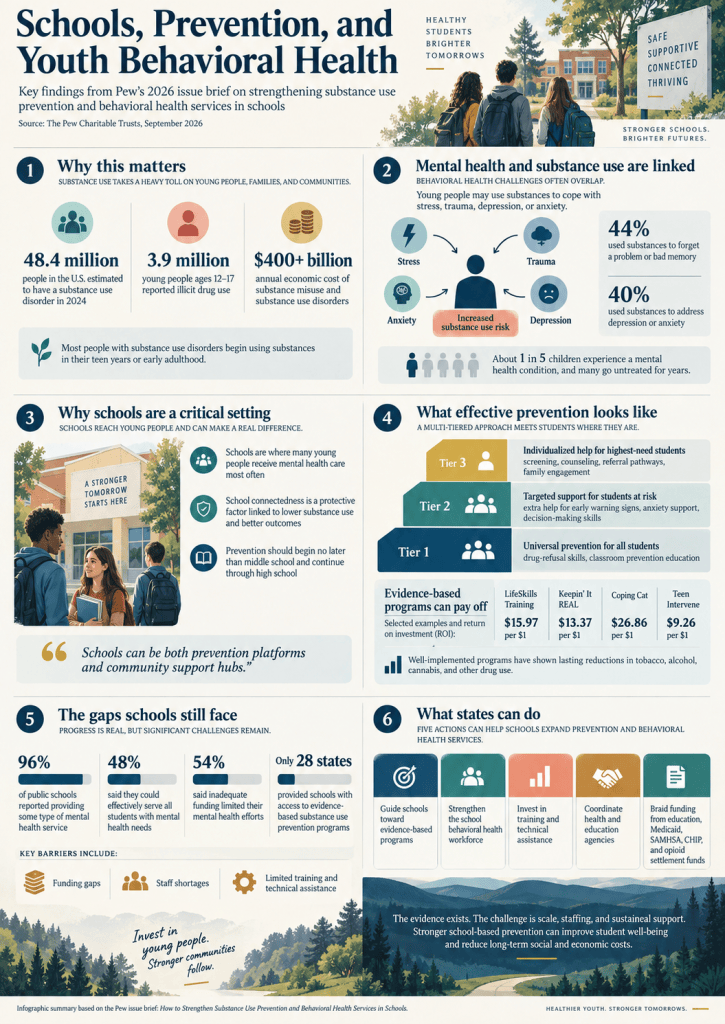
A new issue brief from The Pew Charitable Trusts examines how schools can strengthen substance use prevention and behavioural health services for young people. Published on 16 September 2026, the report brings together research on effective prevention programmes, identifies gaps in existing services, and outlines opportunities for state health and education agencies to improve support for schools. The findings highlight the importance of early intervention, particularly as most people who develop substance use disorders begin using alcohol or other substances during adolescence or young adulthood.
The report draws attention to the close relationship between substance use and mental health. Young people experiencing stress, trauma, depression, or anxiety may be more likely to use alcohol or other substances as a way of coping. A US study of adolescents being assessed for substance use disorder treatment found that 44% reported using substances to forget a problem or bad memory, while 40% reported using them to address depression or anxiety. Pew argues that substance use prevention and mental health services should therefore be developed together, rather than treated as separate areas of school health.
Schools are particularly important settings for prevention because they can reach young people early and provide support throughout adolescence. The report highlights school connectedness, the feeling that teachers, other adults, and fellow students care about a young person’s learning and well-being, as an important protective factor associated with lower rates of substance use and mental health problems. It also describes a three-tier approach to prevention, combining programmes for all students with additional support for those showing early signs of risk and individualised services for young people with more complex needs.
Several evidence-based programmes demonstrate what effective school prevention can achieve. The report highlights LifeSkills Training, a three-year programme that develops personal management, social skills, and substance use resistance skills, with research showing lasting reductions in alcohol, tobacco, and cannabis use. Another example, Keepin’ It REAL, uses discussions, role-playing, games, and youth-developed videos to help students develop practical resistance strategies. For students already experiencing difficulties, programmes such as Teen Intervene provide screening and motivational conversations with school counsellors. Pew also highlights the economic benefits of prevention, with evaluations showing that well-implemented programmes can generate substantial long-term savings.
Despite this evidence, many American schools struggle to provide adequate prevention and behavioural health services. During the 2023-2024 school year, 96% of US public schools reported providing some form of mental health service, but only 48% said they could effectively serve all students with mental health needs. In 2024, 54% of schools identified inadequate funding as a limitation on their mental health services. Schools also face shortages of qualified staff, difficulties identifying appropriate evidence-based programmes, and insufficient training and implementation support. Although most US states required public schools to teach substance use prevention skills during the 2024-2025 school year, only 28 states provided schools with access to evidence-based substance use prevention programmes.
Pew identifies several opportunities to address these gaps, including clearer guidance on programme selection, stronger school behavioural health workforces, better training, and closer cooperation between schools, healthcare providers, and community organisations. The report also emphasises the need for sustainable financing, including combining education and health funding, using Medicaid reimbursements, and directing opioid settlement funds towards youth prevention. Its central message is that effective prevention programmes already exist, but schools need the resources, expertise, and long-term support to implement them consistently. The full report provides examples of prevention programmes, their estimated economic returns, and state-level approaches that could inform efforts to strengthen school-based prevention in other countries.
Read the full report: How to Strengthen Substance Use Prevention and Behavioral Health Services in Schools (September 2026)