Taking a month or several months away from alcohol may do more than create a short break. New research from Thailand suggests that people who complete a temporary sobriety campaign are substantially more likely to consider giving up alcohol altogether.
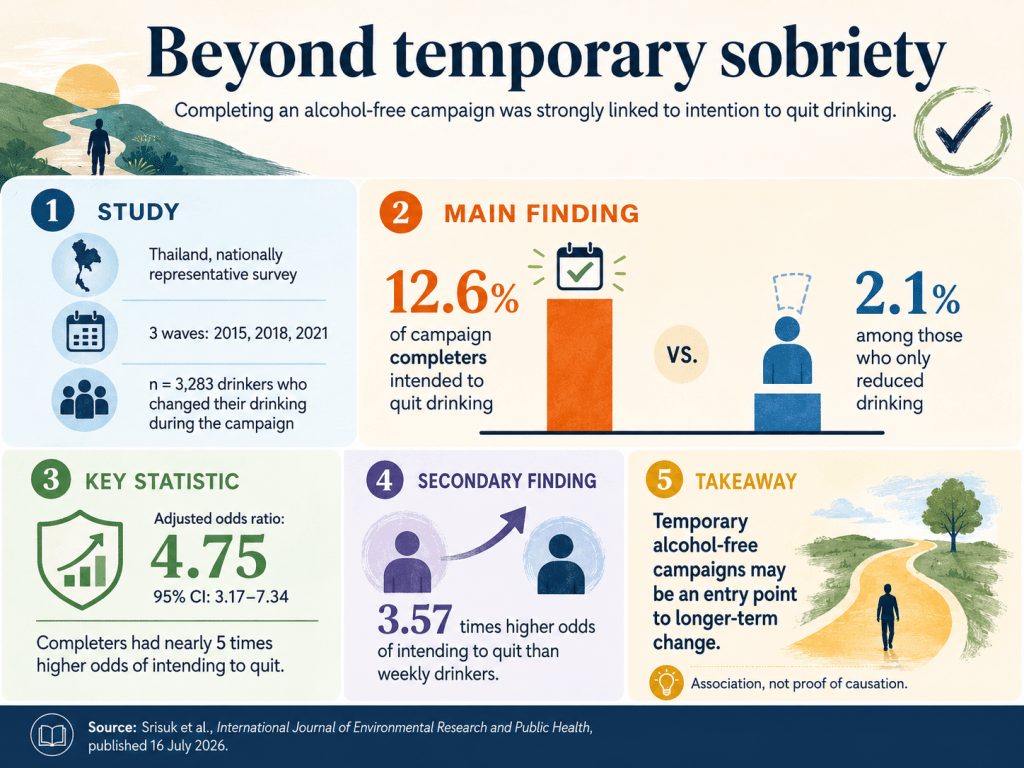
The study examined Thailand’s annual three-month alcohol abstinence campaign, held during Buddhist Lent. Researchers combined data from nationally representative surveys conducted in 2015, 2018 and 2021. Their analysis focused on 3,283 people who had either stopped drinking completely during the campaign or reduced their consumption.
Completing the campaign was linked to an intention to quit
Among people who completed the full three-month alcohol-free period, 12.6% said they intended to continue abstaining and quit drinking. Among those who reduced their consumption but did not remain completely alcohol-free, the figure was only 2.1%.
After taking account of factors such as age, sex, income, education, drinking frequency, previous drunkenness and alcohol spending, campaign completers had 4.75 times higher odds of intending to quit than people who had only reduced their drinking.
This does not mean that everyone who completes a sobriety campaign will stop drinking permanently. An intention to quit is not the same as actually quitting. Still, intentions are an important step in behaviour change, particularly when they are followed by practical support, planning and confidence in the ability to continue.
A temporary break can change how people see alcohol
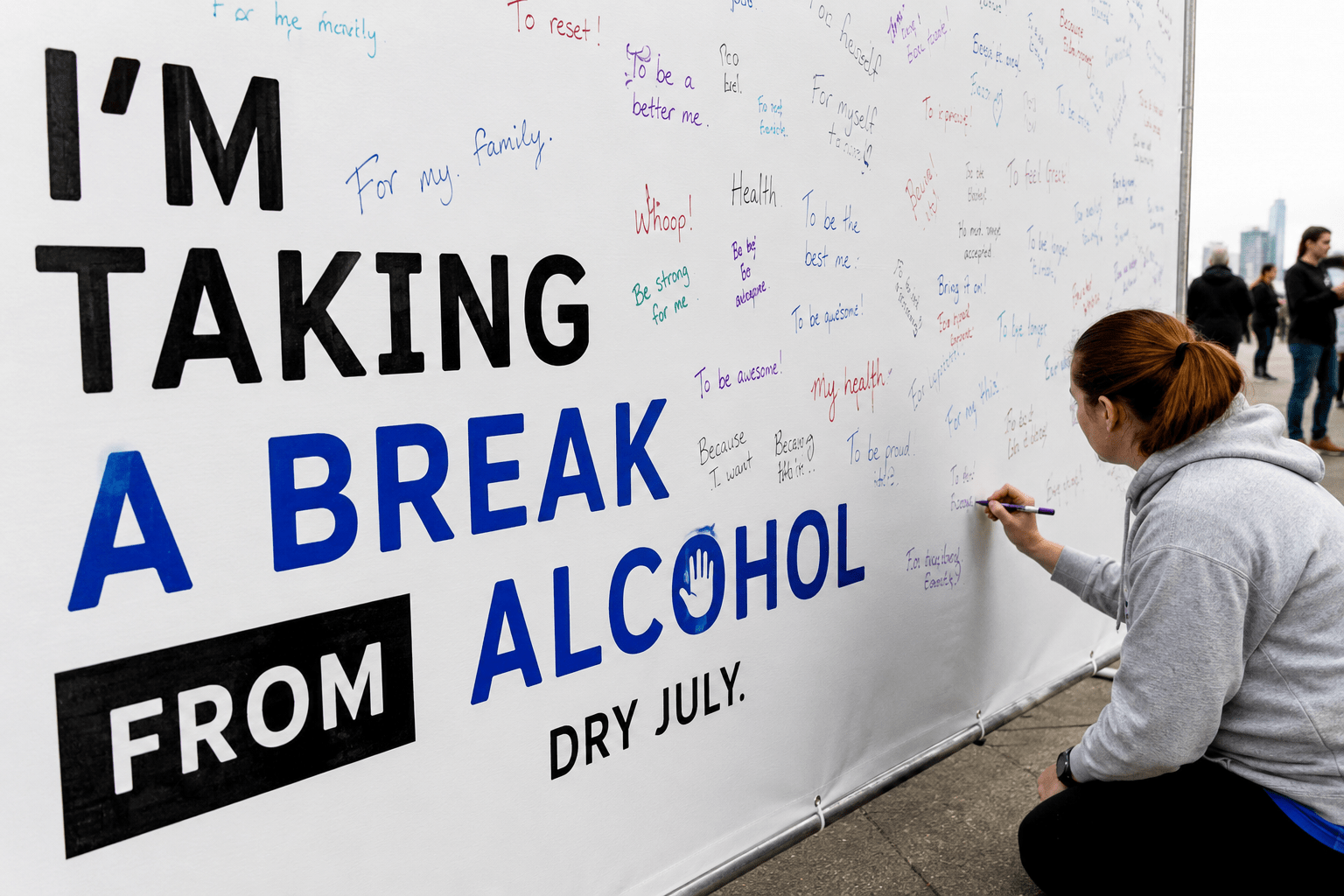
Alcohol-free campaigns such as Dry January, Dry July and Belgium’s Tournée Minérale are often presented as short-term challenges. Participants may join to improve their sleep, save money, test their relationship with alcohol or recover after a period of heavier drinking.
The new findings suggest that these campaigns may also create a moment when some participants begin to reconsider alcohol more fundamentally. Successfully completing an alcohol-free period can show people that drinking is not inevitable and that social situations, celebrations and everyday life are possible without it.
Earlier studies have found that reductions in drinking may continue for several months after temporary sobriety campaigns. Research from the United Kingdom and Belgium has reported lasting reductions in drinking frequency, quantity and episodes of intoxication among some participants. The Thai study adds another possible outcome: a stronger intention to stop drinking altogether.
The end of the campaign may be the most important moment
The researchers argue that the period immediately after a sobriety campaign offers an important opportunity. Participants who have completed several weeks or months without alcohol may be especially open to continuing, but intention alone may not be enough.
Campaigns could therefore offer follow-up messages, alcohol screening, brief counselling and clear routes to professional or peer support. Instead of ending abruptly on the final day, they could help participants decide what happens next.
This matters because sobriety campaigns are relatively low-cost and can reach large numbers of people. They should not replace proven alcohol policies, such as taxation, restrictions on availability and marketing, drink-driving measures, screening and treatment. They may, however, complement these policies by encouraging people to reflect on their drinking and supporting those who are ready to change.
Important limitations
The findings should be interpreted carefully. The research was cross-sectional, meaning it identified an association but could not prove that completing the campaign caused people to want to quit. It is also possible that people who already wanted to stop drinking were more likely to complete the campaign.
The analysis included only people who had changed their drinking during the campaign. It therefore does not represent all drinkers. The campaign was also closely connected to Thailand’s Buddhist cultural context, so its results may not transfer directly to campaigns in other countries.
Even with these limitations, the study offers an encouraging message. Temporary sobriety campaigns should not be viewed only as brief periods of abstinence. For some people, completing the challenge may become the beginning of a much longer change.
Research paper: Beyond Temporary Sobriety: The Association Between Sobriety Campaign Completion and Intention to Quit Alcohol, published in the International Journal of Environmental Research and Public Health on 16 July 2026.