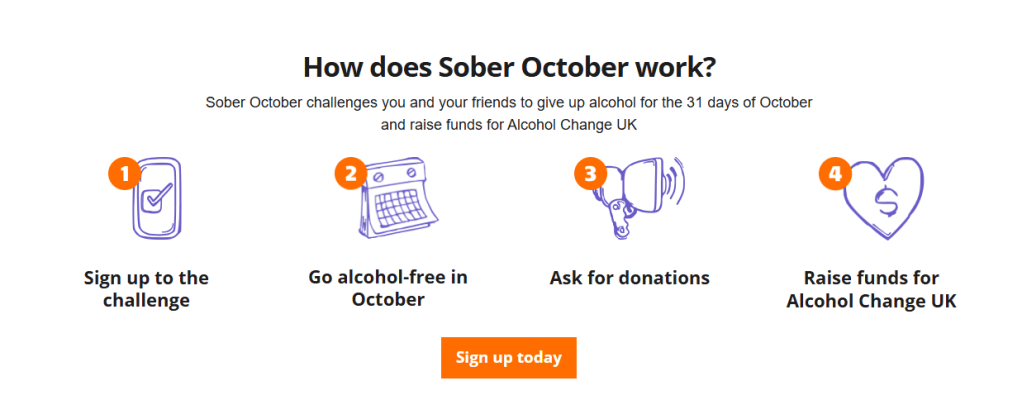
Sober October begins today, inviting people across the UK to spend all 31 days of October alcohol-free while raising money to reduce alcohol harm. The idea is straightforward: participants sign up, create their own fundraising page and ask friends, family and colleagues to sponsor their alcohol-free month. This year marks a new chapter for the well-known campaign, with Alcohol Change UK becoming its official charity partner for the first time. By the morning of 1 October, more than 2,800 people and 65 teams had already signed up through the campaign website.
Alongside fundraising, Sober October encourages people to see what changes when alcohol is removed for a month. The campaign highlights possible benefits such as better sleep, more energy, a clearer head, improved wellbeing and the satisfaction of completing a personal challenge. Participants can also use Alcohol Change UK’s free Try Dry app, selecting the Sober October goal to record alcohol-free days and follow their progress. The campaign provides practical support throughout the month, including preparation advice, fundraising ideas, social media materials, posters, checklists and options for taking part together as a team.
Money raised through Sober October will support Alcohol Change UK’s work to prevent and reduce alcohol harm. This includes providing information and advice, developing digital tools, supporting people who want to change their drinking, training frontline professionals, improving support and treatment, funding and communicating research, and campaigning for better alcohol policy. The campaign gives some practical examples: £25 could help keep tools such as its drinking check and unit calculator freely available, £30 could contribute to training for frontline workers, while £40 could help provide six months of support through the Try Dry app for 16 people.
The 2026 campaign also puts an emphasis on reflection rather than perfection. Alcohol Change UK says that if someone drinks during the month, one day does not have to mean the challenge has failed, and participants are encouraged to reflect and continue. At the same time, the campaign carries an important safety message: people who may be physically dependent on alcohol should not suddenly stop drinking without medical advice, as withdrawal can be dangerous. Sober October therefore combines a highly visible month-long alcohol-free challenge with fundraising, practical behaviour-change support and a wider conversation about people’s relationship with alcohol.
Find more from Sober October (UK, October 2026)