This week, World Cancer Research Fund marks Cancer Prevention Action Week 2026 with a clear message: cut through the noise and focus on the evidence. Health information is everywhere, but when advice is oversimplified, taken out of context, or shaped by trends and influencers, it becomes much harder for people to know what to trust. Cancer prevention needs clear, honest and science-based communication.
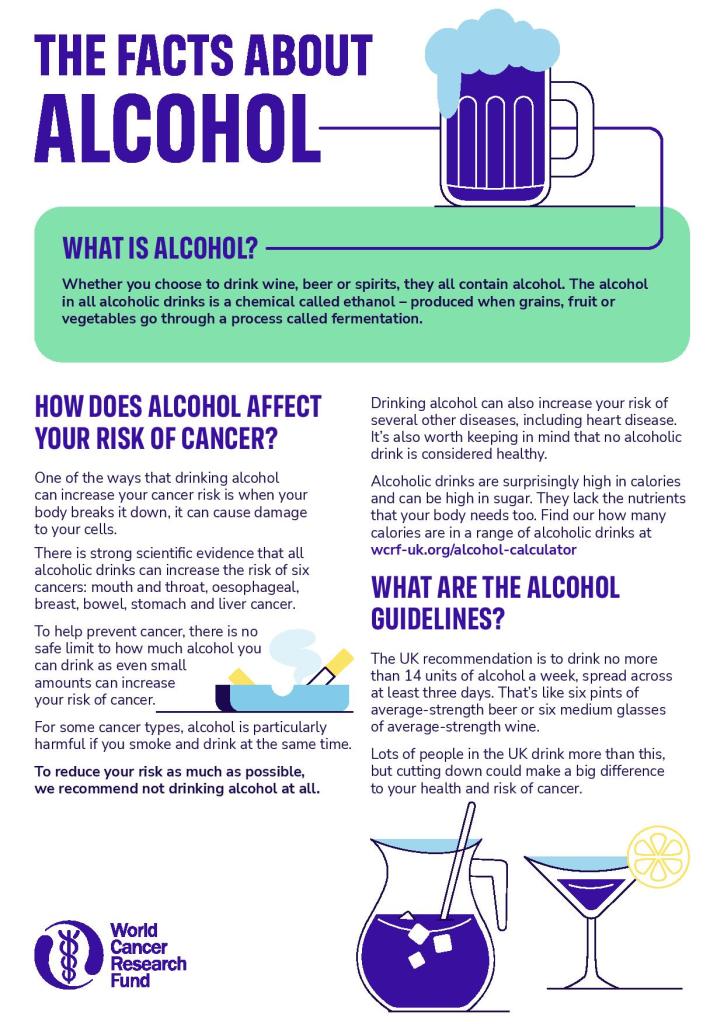
That message is especially important when we talk about alcohol. Alcohol is still too often treated as an ordinary lifestyle product, while its cancer risks remain poorly understood. The evidence is clear: drinking alcohol increases the risk of several cancers, including breast, bowel, liver, mouth and throat, oesophageal and stomach cancers. For cancer prevention, the safest message is also the clearest one: less alcohol means lower risk.
This is where misinformation matters. Claims about “safe” drinking, “healthy” red wine or responsible drinking can distract from what the evidence actually shows. Alcohol-related cancer risk is not limited to one type of drink. Beer, wine and spirits all contain alcohol, and it is the alcohol itself that matters for cancer risk.
Cancer Prevention Action Week reminds us that prevention is not about hype, quick fixes or miracle solutions. It is about helping people make informed choices based on the best available evidence. On alcohol and cancer, that means saying plainly what many people still have not been told clearly enough: alcohol increases cancer risk, and reducing consumption is one of the practical ways to reduce that risk.
Find more from World Cancer Research Fund (June 2026)