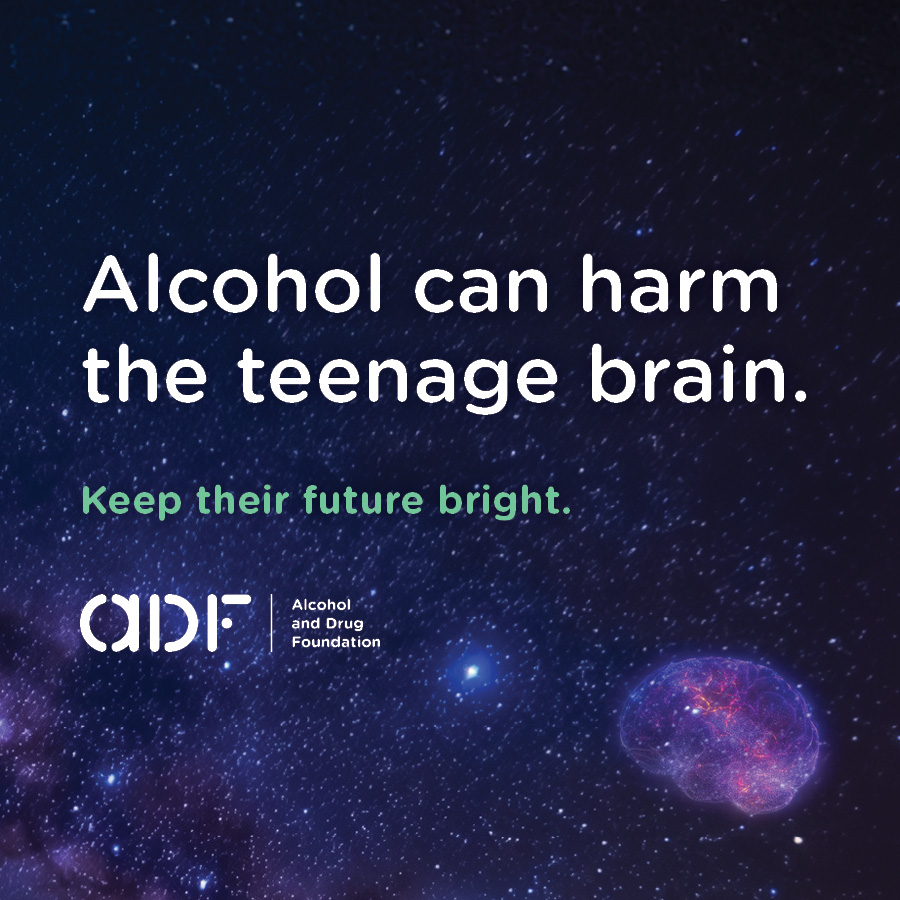
A new Australian study suggests that public health campaigns may be more persuasive when they speak to parents’ values, not only to their knowledge. Published in the Health Promotion Journal of Australia, the paper looks at the development and testing of the Keep Their Future Bright campaign, created to discourage parents from supplying alcohol to children and teenagers. The starting point is clear: Australian drinking guidelines recommend that children under 18 should not consume alcohol, even in small amounts, yet parents remain a common source of alcohol for teenagers.
The campaign was developed by the Alcohol and Drug Foundation together with Common Cause Australia and other partner agencies. Rather than focusing mainly on fear or blame, it used a values-based approach, built around parents’ wish to protect their children and help them reach their potential. The final concept presented adolescence as an important period for brain development, using the image of a brain in the night sky to show both the promise and vulnerability of the teenage brain. The campaign encouraged parents to talk openly with their children about alcohol and to avoid supplying it.
The study behind the campaign was extensive. Researchers reviewed existing evidence, interviewed 15 alcohol and other drug harm prevention advocates, analysed 2,227 public text samples from media and other sources, ran eight focus groups with 72 parents, and surveyed 1,728 parents of children aged 12 to 17. This early work showed a major gap between public health experts and the broader public conversation. Experts stressed that parents should not supply any alcohol to children under 18, while many parents believed that giving small amounts at home could teach moderation and prevent riskier drinking elsewhere.
One of the most important findings was that many parents supplied alcohol because they saw it as a protective act. They worried about teenagers drinking unsupervised, making poor decisions, or ending up in unsafe situations. At the same time, many saw “moderate” alcohol use as relatively safe and were more concerned about short-term harms than long-term health effects. Notably, the paper reports that no parents in the focus groups were aware that alcohol is classified as a Group 1 carcinogen, and very few believed that small amounts of alcohol could increase the future risk of dependency.
The campaign materials were then tested in a national online pre-post survey of 817 parents. After viewing the campaign, the share of parents who thought it was acceptable to supply alcohol at home to a child under 18 fell from 55% to 33%. The share who said alcohol should only be supplied at age 18 or over increased from 34% to 48%, while those who said they would never supply alcohol rose from 11% to 19%. Parents also became more likely to recognise harms linked to underage drinking, including disruption to brain development, poor mental health, accidents, sexual assault, and cancer risk.
The study does not prove that the campaign changed real-world behaviour. The researchers are clear that message testing measured immediate reactions and intentions, not what parents later did at home. Still, the results suggest that carefully designed messages can challenge the deeply held idea that parental supply is safe or protective. For alcohol prevention work, the lesson is practical: campaigns may need to move beyond simply telling parents the facts, and instead connect those facts to the kind of parent many people already want to be, supportive, protective, and willing to set clear boundaries when evidence shows those boundaries matter.
Find more from Health Promotion Journal of Australia (Australia, 2026)

