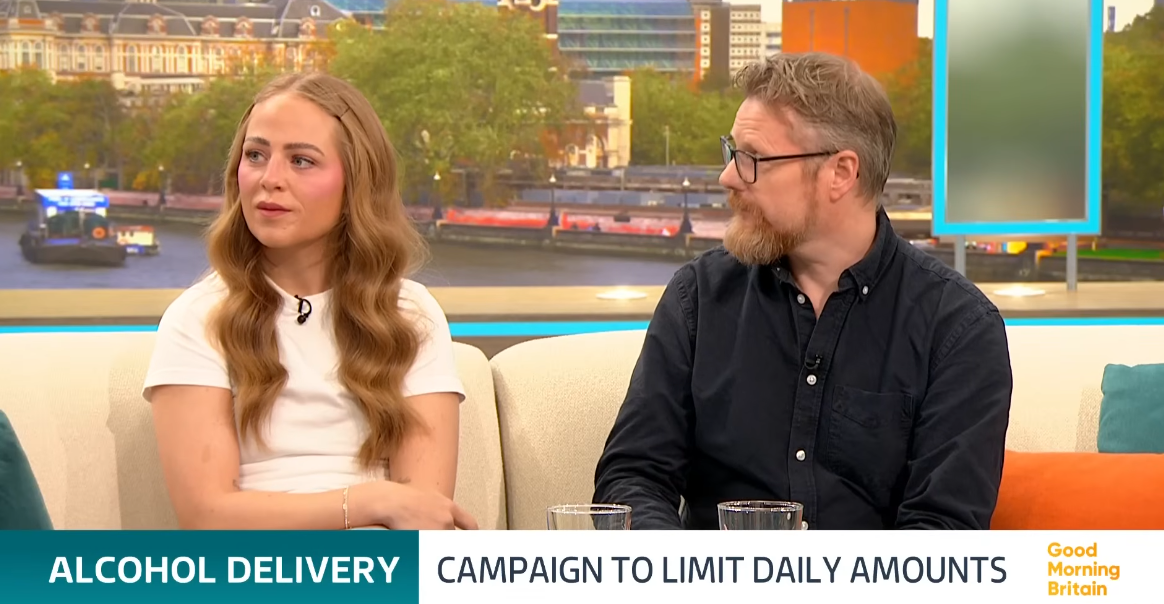
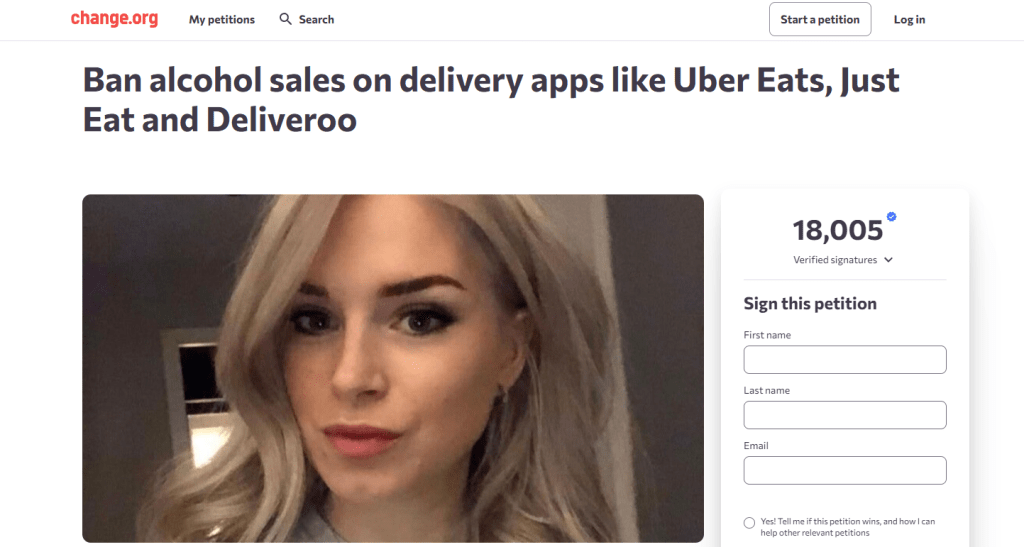
A new campaign in the UK is drawing attention to a growing and deeply troubling gap in alcohol regulation, the role of delivery apps in enabling addiction behind closed doors. Alexandria Hughes began the petition after losing her sister Zoe to alcoholism, and later discovering that Zoe had been spending up to £1,500 a month on alcohol ordered through apps such as Uber Eats, Just Eat and Deliveroo. What shocked the family was not only the scale of the drinking, but how easily it could continue without real barriers, with repeated orders arriving directly at her door.
The campaign argues that rapid alcohol delivery can accelerate isolation and dependency, especially for people already in crisis. In Zoe’s case, her addiction worsened dramatically after moving to an urban area where delivery apps were readily available. According to Alexandria, orders rose to two or three times a day, sometimes amounting to five to seven bottles in a single day, while drivers continued delivering alcohol with little sign of intervention or protection. The petition says this is not just one family’s story, but part of a wider pattern being seen by others facing similar situations.
What makes the issue especially striking is how far behind alcohol regulation appears to be compared with other addictive products and behaviours. The petition points out that gambling has national self-exclusion systems such as GamStop, while no comparable tool exists for alcohol delivery. Families cannot reliably secure permanent blocks for vulnerable relatives, purchase limits do not meaningfully exist, and there is little sign of automatic flagging when extreme repeat orders are placed. As the campaign puts it, alcohol is not the same as groceries or takeaway food, it is an addictive substance linked to thousands of deaths every year, yet technology has moved faster than regulation.
The call now is either to ban alcohol sales on delivery apps altogether, or to introduce urgent safeguards that reflect the seriousness of the harm involved. These include a national self-exclusion scheme, long-term account blocking for vulnerable adults, quantity and spending caps, automated intervention systems, and stronger enforcement of the rule that alcohol must not be delivered to intoxicated people. At its core, this campaign is about a simple question: should digital convenience be allowed to override basic public health protection when lives are clearly at stake?
Find more from Change.org (UK, April 2026)
 Alcohol Awareness