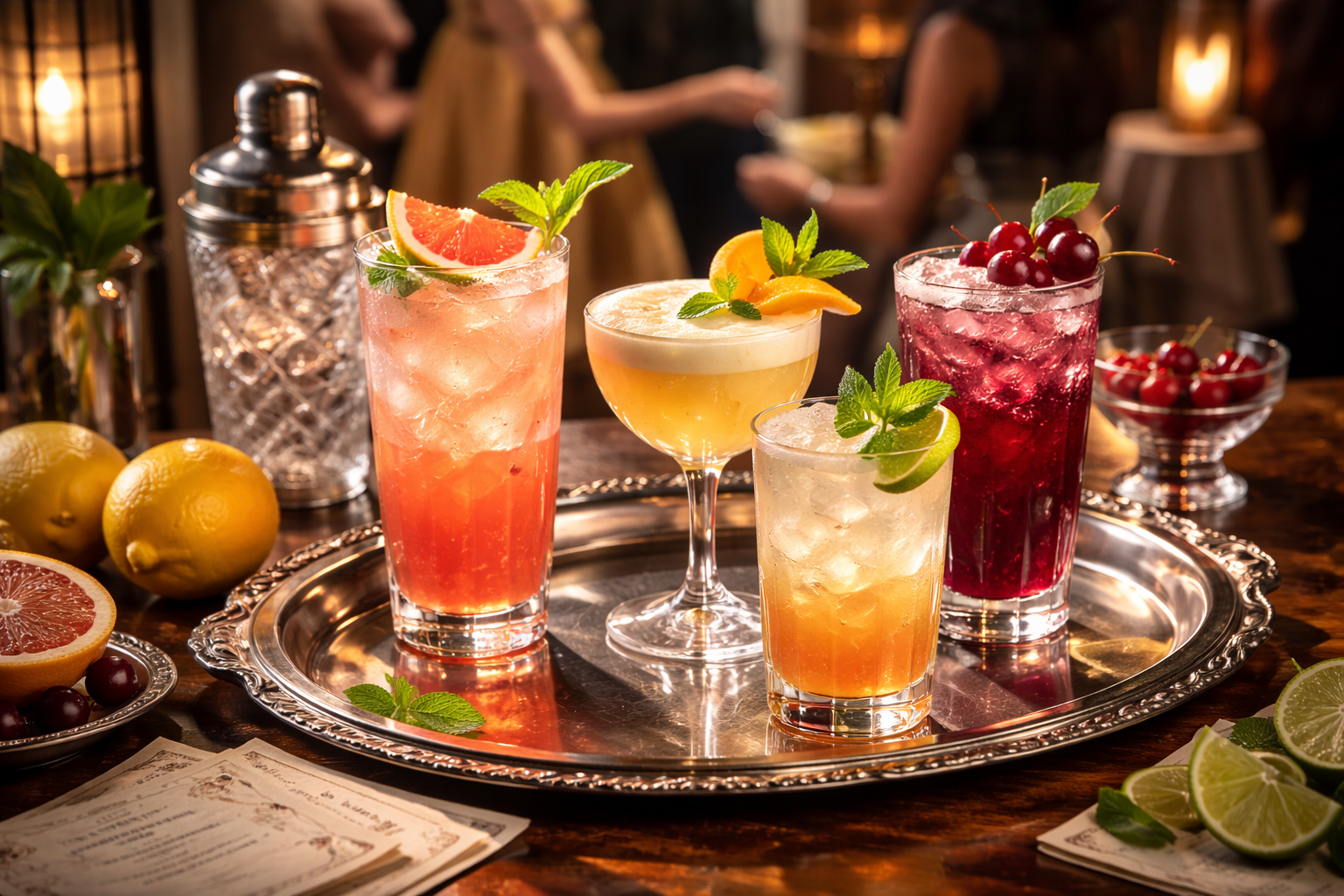
A new video by Prohibition Untold revisits an unusual chapter in alcohol history by tracing the roots of the mocktail back to the final years of American Prohibition. Titled The Rise of the Mocktail: Temperance’s Last Stand, the video argues that as support for Prohibition weakened in the 1920s, the Women’s Christian Temperance Union (WCTU) and other temperance advocates tried to make sobriety more socially attractive by promoting elaborate non-alcoholic drinks. In this telling, the mocktail was not just a drink, but part of a broader attempt to compete with the glamour, ritual and social appeal of cocktail culture.
According to the video, temperance campaigners had come to understand that alcohol’s appeal was not only about intoxication. It was also about presentation, symbolism and participation in modern social life. To respond to that, they promoted drinks designed to imitate the look and feel of cocktails, using fruit juices, tea, spices, carbonation, syrups, egg whites and decorative garnishes. Recipe books, women’s magazines and social events all became part of this effort, with “dry” drinks marketed as sophisticated alternatives that could allow people to take part in the cocktail-hour culture without consuming alcohol.
The video describes this campaign as creative, ambitious and, in the end, unsuccessful. It argues that mocktails of the Prohibition era could mimic appearance and ritual, but not the intoxicating effect that many drinkers were seeking. It also points to the economic crash of 1929 and the growing political push for repeal as factors that made elaborate alcohol-free drinks seem increasingly out of step with the mood of the time. After Prohibition ended in 1933, adult mocktails largely disappeared from mainstream drinking culture and became associated instead with children’s drinks or weak substitutes for “real” alcohol.
At the same time, the video draws a line from those early temperance experiments to today’s renewed interest in zero-proof drinks. What was once framed as a moral and political project is now presented more often through the language of health, lifestyle and personal choice. In that sense, the video suggests that the mocktail did not truly fail, it simply arrived too early. Nearly a century later, the same basic idea, that people may want complexity, ritual and social inclusion without intoxication, has returned in a very different cultural setting.
Find more from Prohibition Untold (USA, March 2026)
 Alcohol Awareness