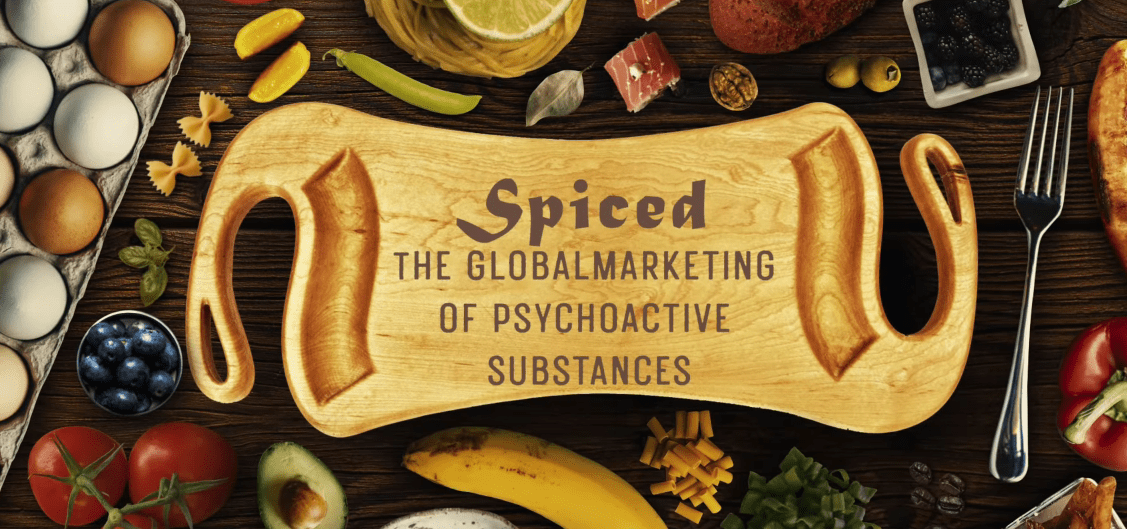
There is a familiar trick in modern life. We are taught to fear “drugs” as something distant and illicit, while overlooking the psychoactive substances sitting in our kitchens, coffee cups, and supermarket aisles. The proof of concept trailer for Spiced: The Global Marketing of Psychoactive Substances, produced by Apex Media Global and led by John L. Graham, challenges that comfortable illusion. It places sugar, caffeine, alcohol, tobacco, opioids and others on the same analytical table and asks a disarming question: how did substances with addictive potential become normalized, protected, and in some cases even celebrated?
The film’s argument is not mystical, it is structural. Through fast historical shifts and sharp visuals, it traces how pleasure is engineered, how the brain’s reward system is targeted, and how marketing transforms taste into habit, habit into dependence, and dependence into profit. The pattern is familiar across industries. Tobacco was once prescribed by doctors. Opioids were marketed as safe pain relief. Sugar saturates childhood diets. Advertising does not merely inform, it shapes norms, reframes risk as lifestyle, and turns consumption into identity. The implication is clear: when billions are spent influencing behavior, overuse stops looking accidental.
When Graham turns to alcohol, the tone sharpens. He points to the Independent Scientific Committee on Drugs, whose 2010 analysis published in The Lancet ranked alcohol as the most harmful drug in the United Kingdom when harm to users and to others was combined, using a method called multi criteria decision analysis. That finding alone destabilizes the cultural script that treats alcohol as an ordinary consumer good. Graham then layers in US data from the National Institute on Alcohol Abuse and Alcoholism, noting that more than half of American adults report drinking in the past month, one in four report binge drinking, and around seven percent meet criteria consistent with alcohol use disorder, roughly seventeen million people. Against that epidemiological backdrop sits an industry of extraordinary creativity and scale, able to turn almost any fermentable carbohydrate into a branded product and to back it with billions in marketing. For Graham, the tension is not subtle: a substance ranked among the most harmful, normalized through relentless promotion, refined into ever stronger and more novel forms, and defended by companies whose sales and marketing budgets rival the public health budgets meant to contain the damage.
Importantly, Spiced does not frame this as a moral crusade against pleasure. It presents addiction less as personal failure and more as a predictable outcome of powerful systems of persuasion. By pointing to boardrooms, policy rooms, and the political influence of major industries, the trailer suggests that regulation often lags behind marketing strategy. Graham’s promise of “seven prescriptions for change” hints at moving beyond outrage toward practical disruption of the cycle. The deeper challenge is philosophical as much as political: if desire can be engineered, then understanding who designs it, and why, becomes a public health issue in its own right.
Find more from Spiced (February 2026)
 Alcohol Awareness