Dr. Akhil Anand’s short video “Alcohol and health risks: clinical cases” (American Society of Addiction Medicine) walks through how to talk with patients about alcohol’s health impacts, with a particular focus on cancer risk. He frames it as a common clinical gap: many people associate alcohol mainly with liver damage, but are less aware of its role in preventable cancers, and that mismatch shows up in everyday conversations in primary care and specialty settings.
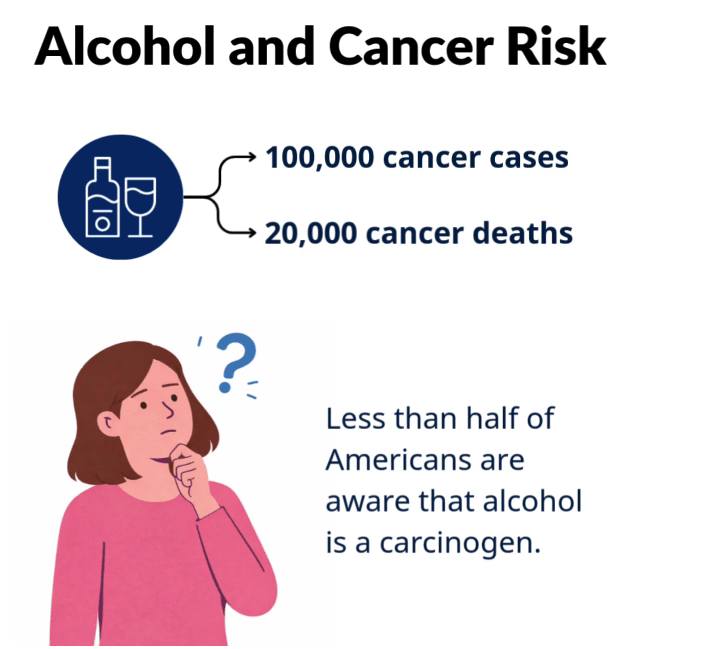
Using a Surgeon General advisory slide as a starting point, Anand emphasizes a plain message for cancer prevention: there is no “safe level” of alcohol, and risk rises in a dose dependent way, including at low levels. He describes alcohol as a Group 1 carcinogen (WHO and IARC classification) and explains four biological pathways highlighted in the video: alcohol metabolizes into acetaldehyde that can damage DNA, it increases oxidative stress and inflammation, it alters hormones such as estrogen, and it can increase absorption of other carcinogens by making tissues more permeable.
The core of the video is three realistic scenarios and the language clinicians can use to keep the discussion supportive, simple, and actionable. A 48 year old woman who drinks wine most nights and believes it is heart healthy, a 28 year old man who binge drinks on weekends and feels fine, and a 62 year old man with alcohol associated cirrhosis in remission who asks about low alcohol beer. Across all three, Anand’s approach is consistent: validate what the patient believes, introduce the cancer risk link in a matter of fact way, and offer a concrete next step that reduces harm over time, without turning the conversation into fear or moral judgment.
Find more from American Society of Addiction Medicine (USA, January 2026)
 Alcohol Awareness