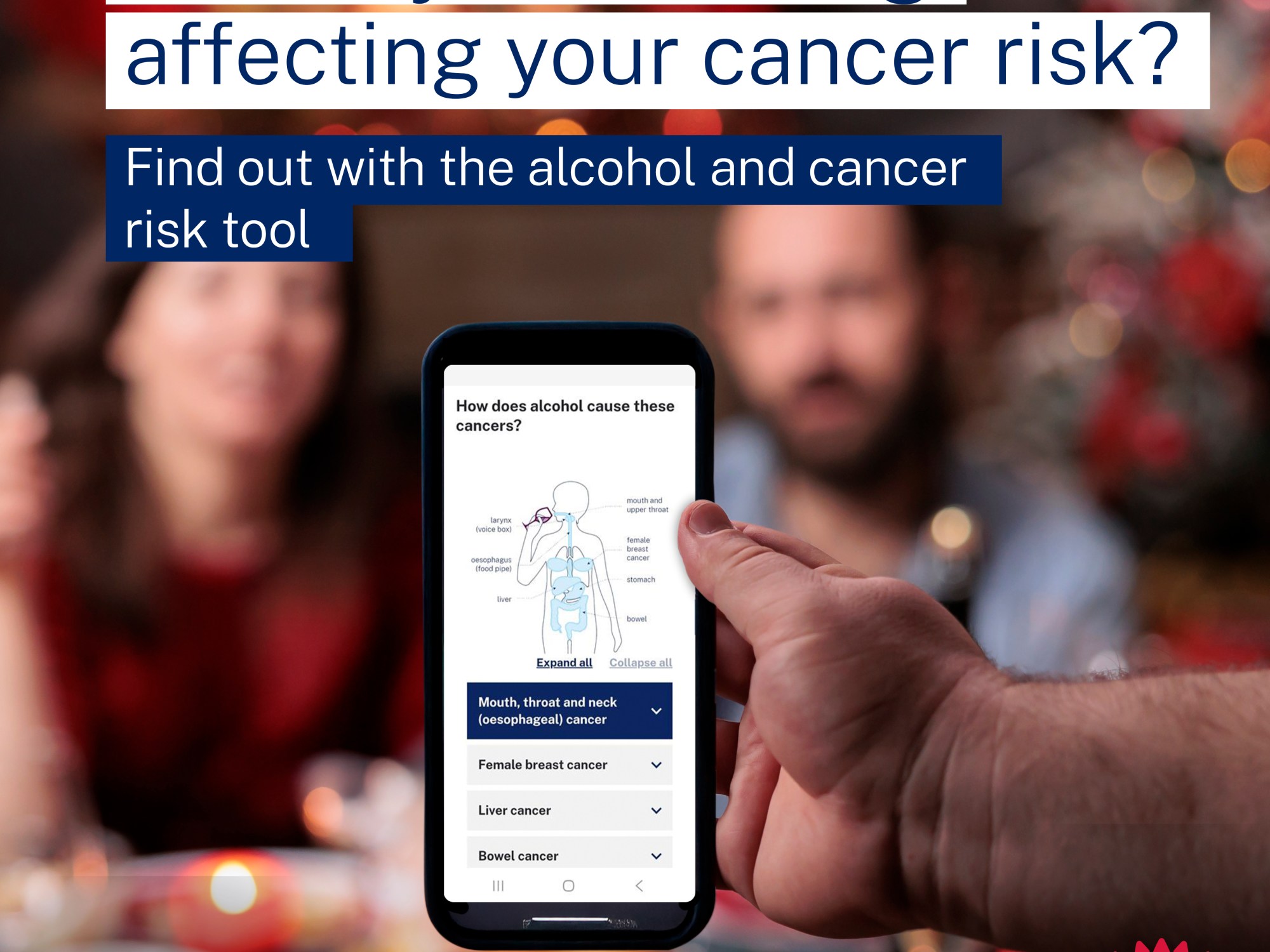
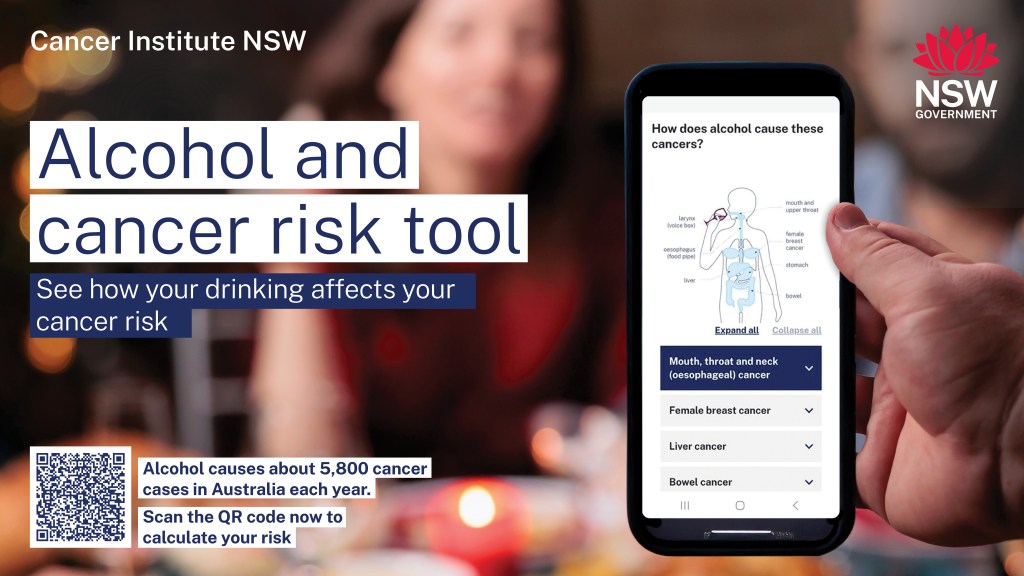
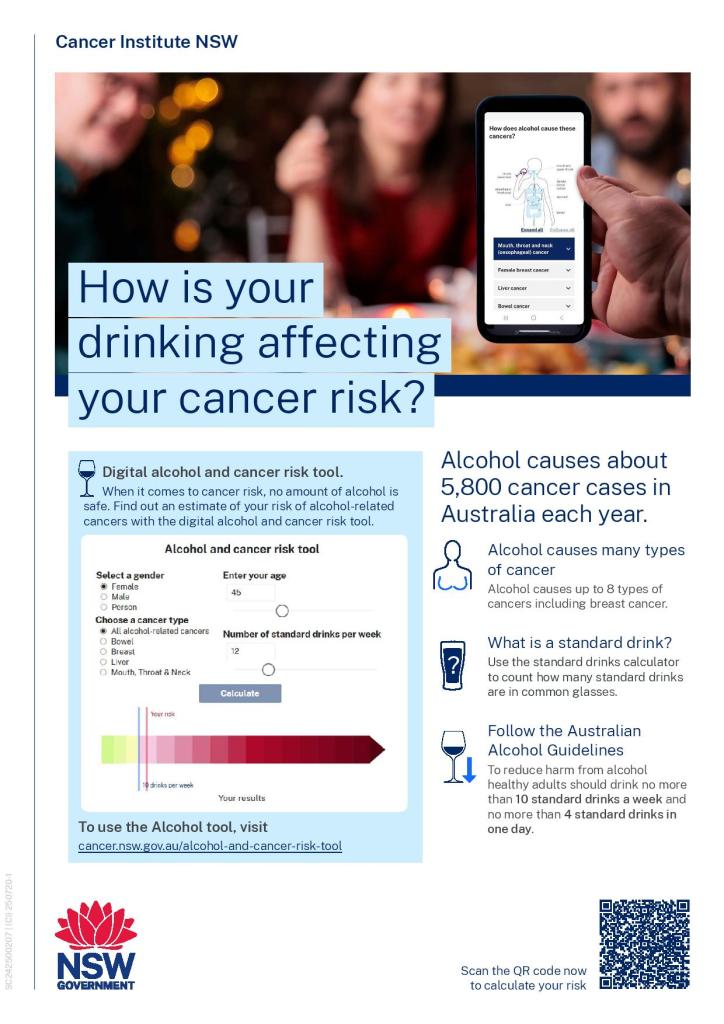
A new Australian-first online tool is helping people understand how their drinking habits affect their risk of developing cancer. Developed by the Cancer Institute NSW, with research by the Daffodil Centre (a partnership between the University of Sydney and Cancer Council NSW), the Alcohol and Cancer Risk tool provides a personalised estimate of lifetime cancer risk based on a person’s age, gender and weekly alcohol intake. The tool aims to make the connection between alcohol and cancer risk more tangible by showing how risk accumulates with every drink.
Alcohol is a known carcinogen, classified as a Group 1 substance capable of damaging DNA and causing cancer. It has been linked to at least eight different cancers, including those of the liver, bowel, mouth, throat, larynx, oesophagus, neck and female breast. Research shows that among adults over 45, the risk of developing an alcohol-related cancer increases by around 10 per cent for every seven standard drinks consumed per week. According to the Cancer Institute NSW, about 5,800 cancer cases could be prevented in Australia each year if people limited their alcohol use.
NSW Health Minister Ryan Park said the new tool will help people see how even moderate drinking can have long-term health effects. “This important tool, which was pioneered right here in NSW, will make sure people have access to the information they need to make healthier choices,” he said. Cancer Institute NSW’s Senior Clinical Advisor, Associate Professor James Lynam, added that while even small amounts of alcohol can increase risk, reducing alcohol consumption can be life-changing.
The Cancer Institute NSW encourages people who are concerned about their drinking to speak with their GP or reach out to the Alcohol and Drug Information Service (ADIS), which offers 24-hour support on 1800 250 015. The Alcohol and Cancer Risk tool is freely available on the Cancer Institute NSW website, offering Australians a simple way to understand how drinking affects their cancer risk and to take steps toward a healthier life.
Find more from Cancer Institute NSW (Australia, November 2025)
 Alcohol Awareness