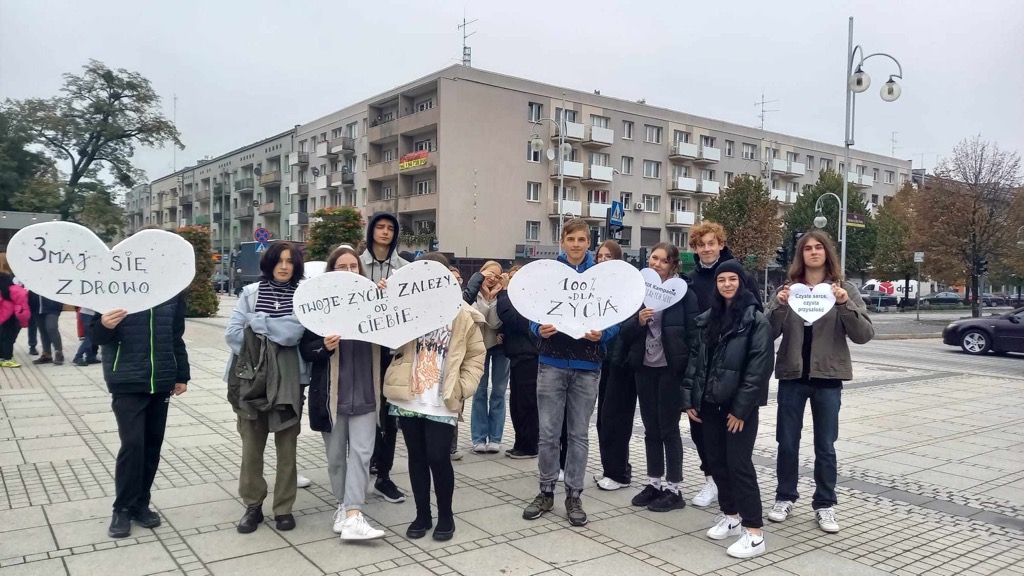
Across Poland this October, the Marsz Białych Serc (White Hearts March) once again united communities under a common message: standing against addiction and violence. The nationwide prevention campaign, now in its 21st year, has become one of the country’s largest educational initiatives. Schools, youth centers, and local institutions joined the movement by displaying white hearts as a symbol of solidarity with those affected by addiction and abuse. Under this year’s motto “Nie zgubić drogi do domu” (“Don’t lose your way home”), participants reflected on how easily people can lose direction through substance use or violence, and how collective awareness and empathy can guide them back.
In Częstochowa, students filled the streets carrying white hearts and balloons, expressing support for people struggling with addiction. Many spoke about how these campaigns could reach even more young people if they were more visible online and supported by popular influencers. The event was part of a wider local program that included workshops like “Stop damskim bokserom” (Stop Domestic Abusers), teaching girls self-defense and confidence, and “Dopalam się na zdrowo,” which promoted healthy living through shared cooking and discussions about wellbeing. Activities like these showed that prevention can be engaging, positive, and rooted in everyday life.
Other towns also joined the initiative. In Konin, students and teachers from the Stefan Batory Continuing Education Centre marched together to the city’s main square, joined by Vice President Witold Nowak. Their banners and white hearts sent a strong message of courage and social responsibility. A student representative reminded everyone that saying “no” to drugs and violence means protecting not only one’s own life but also that of others. The march ended with music and reflection, as the school choir performed Dżem’s “Wehikuł czasu,” dedicating it to those who lost their lives to addiction or abuse.
The White Hearts Campaign has evolved into more than an awareness effort; it is a community ritual that nurtures empathy, solidarity, and resilience. By connecting young people through art, discussion, and public demonstration, it helps them build emotional literacy and moral awareness, skills as vital as any school subject. Each white heart displayed across Poland is both a tribute and a pledge: a promise to choose compassion, to stand against harm, and to help others find their way home.
 Alcohol Awareness