October’s Liver Cancer Awareness Month brings attention to one of Europe’s most preventable yet growing cancers. EASL’s new Policy Dialogue and its collaboration with the International Liver Cancer Movement, Digestive Cancers Europe, and ELPA underline how liver cancer, which mainly affects men, continues to rise. Alcohol use remains one of the key drivers, alongside obesity and viral hepatitis. The movement’s 2025 theme, “Liver Cancer Rights Now,” calls for early detection, better national cancer strategies, and universal hepatitis B vaccination. But just as importantly, it challenges stigma, the quiet barrier that still stops open discussion about liver disease when it’s linked to alcohol or drug use.
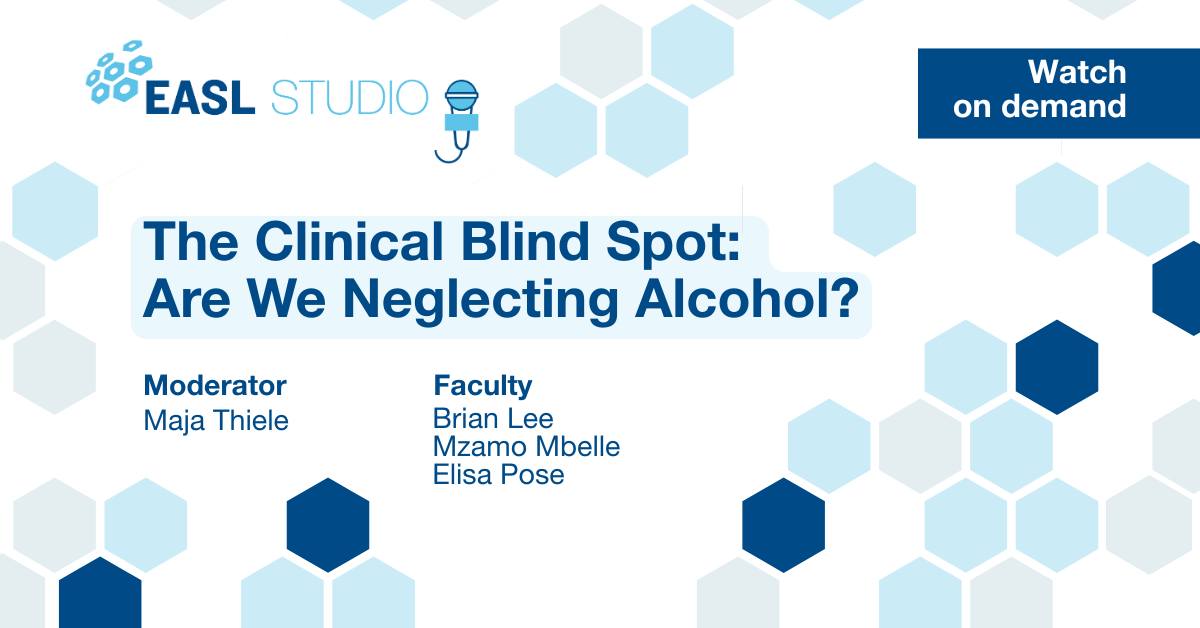
EASL’s focus on alcohol becomes even clearer in its recent episode, The Clinical Blind Spot: Are We Neglecting Alcohol? Hepatologists from Europe, the U.S., and South Africa discussed how alcohol-related liver disease (ALD) is everywhere in hospitals but almost invisible in official data. The paradox is stark: patients with alcohol-related cirrhosis occupy a large share of hospital beds, yet population studies record only a few percent as alcohol-linked. The discussion revealed a mix of problems, underreporting, stigma, and even new disease classifications that tend to hide alcohol’s role behind metabolic or lifestyle terms.
Several speakers warned that this misclassification not only distorts the data but also weakens prevention. When alcohol is treated as just another “metabolic factor,” policy urgency fades. Yet alcohol’s influence on liver cancer and other chronic liver diseases is profound. It accelerates cirrhosis, reduces survival rates, and complicates treatment decisions. As one participant put it, the true system failure is not the disease itself but the lack of consistent intervention for alcohol use disorder. Patients are often treated for their damaged liver while the underlying alcohol problem remains untouched.
EASL’s campaign this October serves as both a policy reminder and a clinical challenge: the tools to prevent liver cancer already exist. Vaccination, early screening, and treatment of alcohol use disorder are all proven strategies. What’s missing is the political and medical will to address alcohol as a cause, not just a symptom. To understand and tackle liver cancer in Europe, alcohol must move from the margins of policy and research back to the center of the conversation, where it belongs.
Find more from EASL (Europe, October 2025)
 Alcohol Awareness