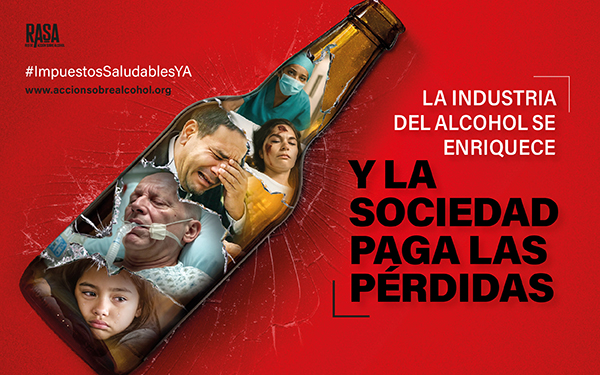
On 18 September 2025, the Red de Acción Sobre Alcohol (RASA) and partner civil society groups launched “Who pays for the harms of alcohol? Healthy taxes NOW!” to push for an update to Mexico’s alcohol excise tax (IEPS). The core message is simple and stark. Alcohol’s direct and indirect costs, about 552 billion pesos in 2021 (roughly 2.1% of GDP), were around twelve times larger than what the alcohol industry paid in taxes and remunerations, about 65.8 billion pesos. The public is already primed for change, with national polling showing strong support for higher alcohol taxes, especially when revenues fund health and education.
The campaign frames alcohol as a major public health problem. In 2022, Mexico recorded roughly 210,000 new cases of alcohol-attributable disease and about 41,000 deaths linked to alcohol use. The evidence base is broad. Alcohol is a risk factor for more than 200 diseases, injuries and adverse conditions, including mental health disorders, cardiovascular disease, road traffic injuries, violence, suicide, tuberculosis, HIV and rheumatic conditions. This burden helps explain why six of the ten leading causes of death in Mexico are tied to alcohol use. The campaign materials, including the infographic “Alcohol taxes: The most effective solution to prevent its harms,” highlight these consequences in a format accessible to the general public.
RASA and invited experts argue for a clearer, health-oriented IEPS design that taxes the amount of pure alcohol in each drink. Modeling presented under the theme “Who pays for the harms?” estimates that a shift to specific, per-milliliter excise could reduce alcohol consumption by about 37% while raising up to 105 billion pesos in revenue. Research from the National Institute of Public Health projects large health and safety gains under such a reform, including fewer cirrhosis deaths and tens of thousands fewer family-violence injuries over the coming decade. The tax change is also progressive, with a larger share of the burden falling on higher-income households. International guidance points the same way. Both WHO and the World Bank recommend higher alcohol taxes, and countries that combined taxation with marketing and availability controls, such as Russia between 2000 and 2015, saw sharp drops in consumption and harm.
The social stakes are front and center. Families and the public health system currently absorb the costs, while the industry keeps the profits. The campaign highlights harms widely recognized by Mexicans, including liver disease, cancer, road crashes, violence against women and violence in the home. Its call to action runs through #ImpuestosSaludablesYa and asks legislators to include an IEPS update in the 2026 fiscal package.
More information is available at https://www.accionsobrealcohol.org/ (Mexico, September 2025)
 Alcohol Awareness