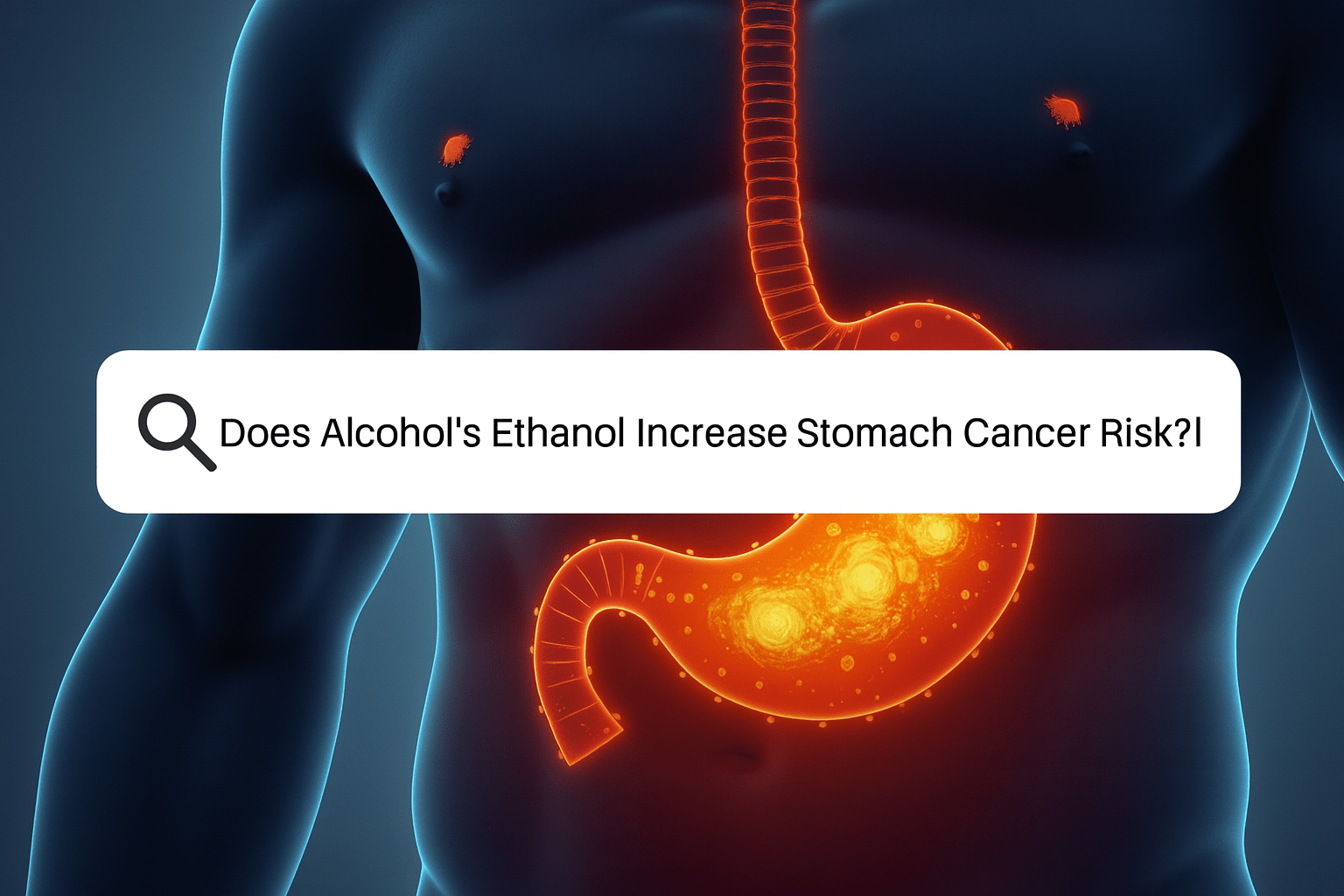
Alcohol’s ethanol has been identified as a factor that can increase the risk of stomach cancer, particularly with long-term heavy drinking. Research shows that even one standard drink per day, which contains about 12.5 grams of ethanol, may raise the risk by around 4 percent. The risk grows with higher and more frequent consumption, with heavy drinking especially linked to non-cardia stomach cancer (in the lower part of the stomach). This is largely due to ethanol being metabolized into acetaldehyde, a toxic compound classified as a probable human carcinogen, which damages DNA and proteins and promotes cancer development.
Alcohol also affects the body’s ability to absorb and use essential nutrients like vitamins A, C, D, E, folate, and carotenoids, all of which play important roles in DNA repair and cell health. When these processes are disrupted, the body becomes more vulnerable to cancer. Some studies suggest that beer and spirits may pose a stronger risk than wine, though the overall evidence points clearly to alcohol consumption, especially above about 45 grams of ethanol per day (around three drinks), as a significant contributor to stomach cancer risk.
The good news is that individuals can take steps to reduce their risk. Moderating alcohol consumption is an effective start, particularly when combined with other protective habits such as avoiding tobacco, eating a diet rich in fruits and vegetables, and treating Helicobacter pylori infections. Since everyone’s health profile is unique, consulting a healthcare professional is the best way to understand personal risk factors and create a plan for prevention.
Find more from Stomach Cancer Support Network (USA, September 2025)
 Alcohol Awareness