
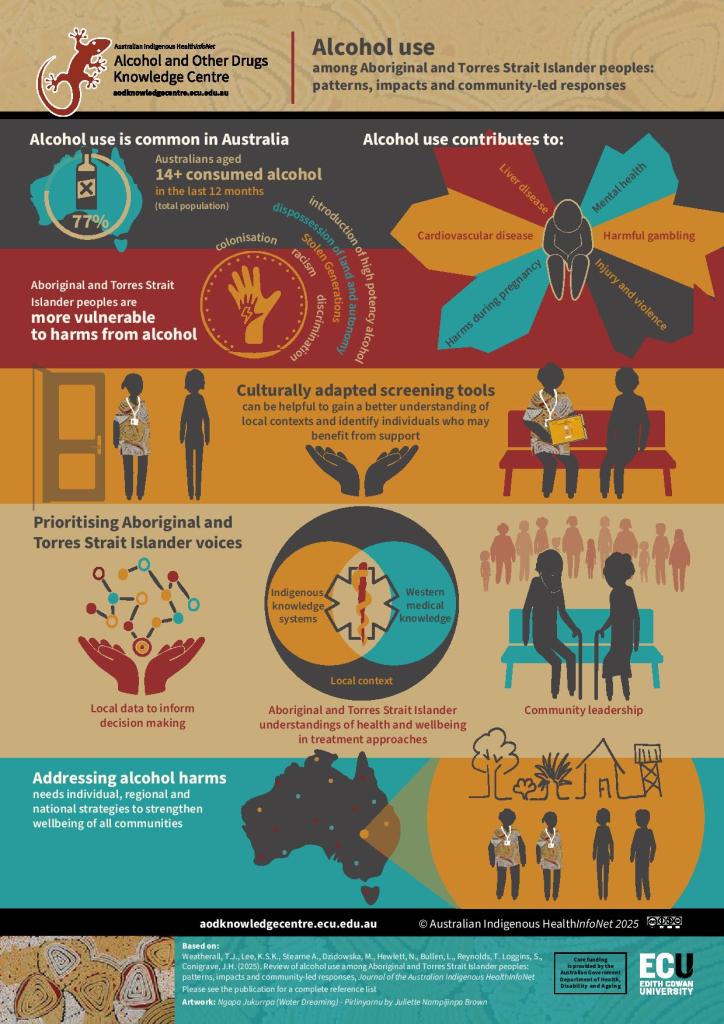
A new animated video from Australian Indigenous HealthInfoNet highlights key findings from the Review of alcohol use among Aboriginal and Torres Strait Islander peoples: patterns, impacts and community-led responses. It presents both the scale of the challenge and the many strengths of Aboriginal and Torres Strait Islander communities in addressing alcohol-related harms. While alcohol use has decreased overall in Australia, it still contributes significantly to physical, mental and social harms, with colonisation and its ongoing impacts creating greater vulnerability among Aboriginal and Torres Strait Islander peoples.
The video and review underline the importance of trauma-informed and culturally safe approaches. National surveys alone often miss the detail needed to guide local action, so culturally adapted screening tools and community-driven data collection are vital. Clearer pictures of local drinking patterns help ensure that resources are directed where they are needed most. These tools not only identify challenges but also point to opportunities for early and effective support.
Community-led initiatives already provide strong examples of action. Local efforts have included restricting alcohol supply, opposing new liquor outlets, tackling underlying social issues like housing and employment, and promoting holistic wellbeing approaches. The review also points to bicultural models of care in health services, where Aboriginal and Torres Strait Islander knowledge is combined with Western medical practices, fostering trust and offering more effective pathways to recovery.
Central to all of this is Aboriginal and Torres Strait Islander leadership. The review stresses that solutions must be guided by the voices, priorities and strengths of communities themselves. By investing in local capacity, supporting Indigenous scholarship, and ensuring communities retain control over research and decision-making, more robust systems can emerge. These approaches not only reduce alcohol harms but also strengthen equity, resilience and wellbeing across generations.
For more information, see the AOD Knowledge Centre (Australia, September 2025)
 Alcohol Awareness