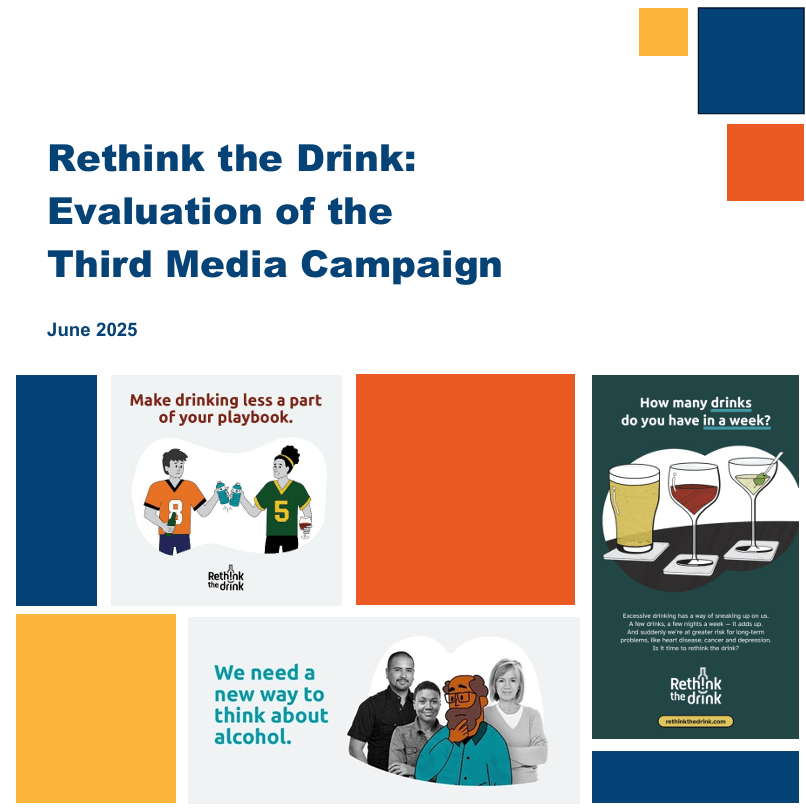
We often report on new campaigns and awareness-raising initiatives, but we rarely get to see how effective they actually are. Today we are looking at the evaluation of Oregon’s third Rethink the Drink (RTD) campaign, which ran from December 2023 to February 2024 and set out to reduce excessive alcohol use by encouraging people to reflect on alcohol’s role in their lives and communities.
Professional Data Analysts carried out a mixed-method evaluation using surveys, focus groups, media data, and website analytics.
Strong reach and recall
Nearly half (47%) of Oregonians surveyed recalled seeing or hearing RTD ads or the brand logo. This marks a 30% increase from the first RTD campaign in 2022. Campaign messages reached people across multiple channels, including TV, digital platforms, print, and radio. Recall was particularly high among people who drink excessively and among Black, Hispanic, and Latino communities. In addition, the campaign generated significant earned media, with 77 news stories reaching over 44 million impressions.
Believable, direct, and non-judgmental messaging
Among those who recalled the campaign, 85% said the ads were believable, 82% said they got their attention, and 45% reported learning something new. Focus group participants described the campaign as empowering, relatable, and non-judgmental, appreciating that it portrayed “normal people reflecting on their drinking” rather than crisis scenarios. Younger adults and people who drink excessively were the most likely to say the campaign made them reflect on their own alcohol use or even change their perspective.
Sparking reflection and conversations
The evaluation found that the campaign prompted self-reflection, especially among people who drink excessively. Those exposed were significantly more likely to have conversations about their own alcohol use compared to pre-campaign levels. Some focus group participants reported discussing alcohol use with partners or friends after seeing ads, often around holiday drinking patterns or family life. Comfort with having these conversations was generally high across groups, although people noted it was often harder to raise the issue with close family members.
Awareness of harms and community presence
Most respondents were aware that excessive drinking causes serious health problems, such as liver disease, heart disease, and high blood pressure. However, knowledge about the alcohol-cancer link remained relatively low: only 60% of exposed respondents recognized it, compared to more than 85% for other health harms. This highlights an opportunity for future messaging.
On a community level, Oregonians widely agreed that alcohol is “everywhere” (84%) and that it should have less presence (66%). Focus group participants pointed to alcohol being common even in family-oriented settings like skating rinks or pizza places. A majority (92%) agreed that excessive alcohol use causes community problems, and six in ten said it can and should be addressed at the community level. Suggested solutions included making non-alcoholic options more affordable, raising taxes, and continuing public education efforts like RTD.
Lessons for the future
The third RTD campaign demonstrated strong reach, credibility, and resonance. It was especially effective in encouraging reflection and sparking conversations about alcohol use. The evaluation suggests that future campaigns could build on this by:
- Placing greater emphasis on the alcohol-cancer connection, where knowledge remains weaker.
- Exploring messaging tailored to people who drink excessively, some of whom felt the ads did not reflect their experiences.
- Continuing to highlight alcohol’s prevalence in communities and providing resources that support family discussions and healthier choices.
Overall, Rethink the Drink continues to grow as a trusted and impactful brand in Oregon’s effort to reduce alcohol-related harm.
Revisit the Rethink the Drink campaign
 Alcohol Awareness