The French road‑safety authority has been repositioning its public‑communication work. In late 2019 the Sécurité Routière retired its stern slogan “Tous responsables” (All responsible) and replaced it with a more inclusive line, “Vivre, ensemble” (living together), which is intended to remind people that the road is a shared civic space. A Harris Interactive survey commissioned to support the rebrand found that 52 % of respondents feel less safe on the road than they did in the past and that 77 % believe road safety improvements depend on better respect for the rules. Ninety‑four per cent said they want more courtesy and benevolence from other road users. Against this backdrop the Sécurité Routière launched a series of short films and radio spots that tell the “chronique des accidents qui n’arriveront pas” (the story of accidents that never happened). In each mini‑drama a character – for example Marc or Léa – thanks an anonymous driver whose cautious behaviour prevented a crash, underlining the new campaign’s message that everyone has the power to save a life.
A special Christmas component of the campaign tackled drink‑driving head‑on. Beginning 20 December, television and radio broadcasters played a message titled “Quand on tient à quelqu’un, on le retient” (“When you care about someone, you hold them back”). The spot urges viewers and listeners to intervene when a friend or family member is about to drive after drinking. More than fifty popular television presenters and actors lent their voices to the effort, a way of demonstrating that preventing drink‑driving is a collective responsibility. This blend of personal appeals and celebrity endorsements is designed to tap into social norms rather than rely solely on enforcement.
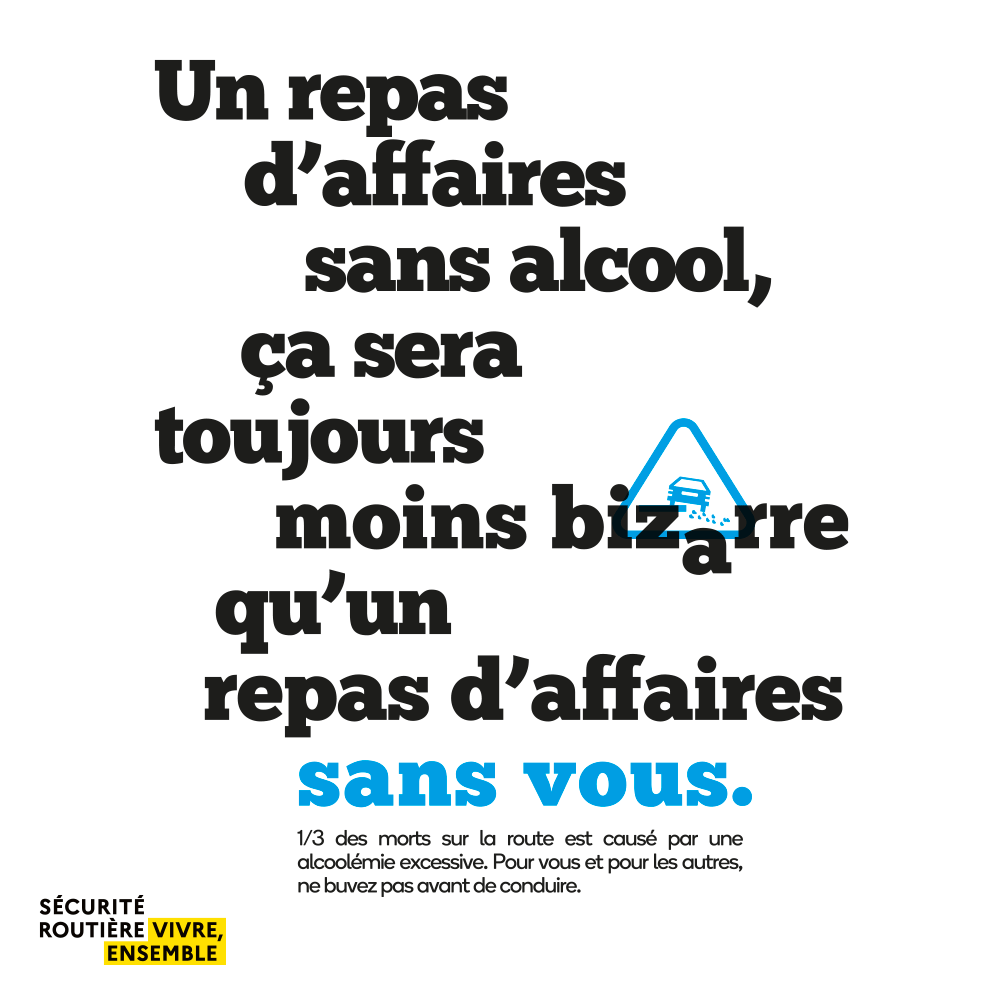
Complementing the audiovisual campaign, the Sécurité Routière produced educational materials for employers, schools and community groups. A trifold leaflet titled “L’alcool et la conduite : prenez la mesure du risque” emphasises that alcohol is one of the leading causes of fatal traffic offences in France. It notes that more than 1 000 people die each year in crashes involving illegal blood‑alcohol levels and that most of these deaths could be avoided if drivers respected the legal limit of 0.5 g of alcohol per litre of blood (0.25 mg/l of breath) – or 0.2 g/l (0.1 mg/l breath) for novice drivers. The organisation also recruits student ambassadors who deliver messages on key themes such as alcohol and driving, bicycle and new‑mobility safety and the dangers of distraction. These volunteers help bring the campaign into universities and local communities.
Behind this communication strategy is the Délégation à la Sécurité Routière (DSR), the central French agency charged with road safety. Created in 1982 and attached to the Ministry of the Interior in 2012, the DSR designs and implements national road‑safety policy and coordinates inter‑ministerial work. It oversees legislative and regulatory initiatives relating to the Code de la route, runs education programmes and manages enforcement, including automated systems for detecting offences. The agency also conducts studies and experiments through the National Inter‑ministerial Road Safety Observatory (ONISR). Organised into sub‑directorates for inter‑ministerial action, road‑safety education and cross‑functional resources, with dedicated departments for automated control and communication, the DSR mobilises local volunteers and professionals to carry its messages, illustrating that road safety in France is framed not merely as a policing issue but as a shared civic project.
Find more from Sécurité routière (France, 2025)
 Alcohol Awareness