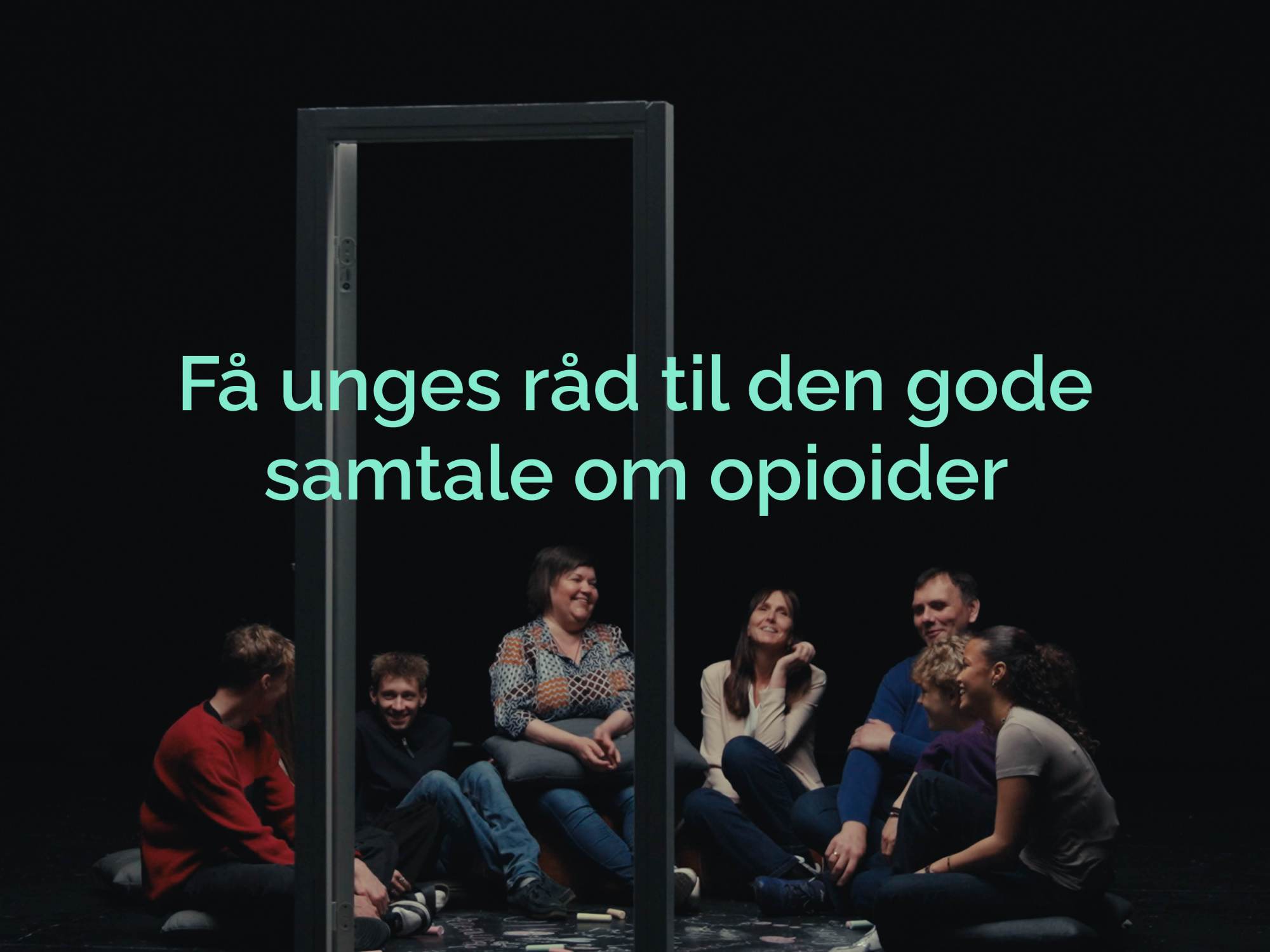
The Danish Health Authority and the City of Copenhagen have launched a new campaign to support parents and other adults in having conversations with teenagers about opioids and other drugs. This campaign aims to provide concrete knowledge and practical advice to make these important talks easier. It is part of the government’s broader initiative, “Youth without Opioids,” which also includes a new knowledge bank featuring up-to-date statistics on opioid and drug use, including data from a recent wastewater analysis.
According to a new survey conducted for the Health Authority and the City of Copenhagen in February 2025, 47 percent of about 1,533 parents of teenagers said they do not feel they know enough about opioids to talk to their children about the topic. The Director of the Danish Health Authority, Jonas Egebart, stresses that this conversation is vital. With the new campaign, the goal is to equip parents and other adults around young people with the tools and information needed to discuss opioids, and to highlight the important role adults play in prevention.
The City of Copenhagen has contributed both financially and with professional expertise to the campaign. Sisse Marie Welling, the city’s Mayor for Health and Care, says that the issue is so important that collaboration is necessary to find the best solutions. The campaign is being shared freely with all other 97 municipalities in Denmark to ensure the widest possible reach, since drug issues do not stop at municipal borders.
Alongside the campaign, the Health Authority is also launching a new knowledge bank at sst.dk. This resource gathers health data and studies on opioid use, poisonings, deaths, and treatments, all in one place and across various organizations. Among the new data sources is the Danish part of the European school survey ESPAD, published by the National Institute of Public Health on June 10. The knowledge bank will also include data from the Poison Line, National Police, the Centre for Alcohol and Drug Research, the University of Copenhagen, and the Rockwool Foundation.
One notable new report in the knowledge bank presents the results of national wastewater monitoring of drugs in six Danish cities. Conducted by the Institute of Forensic Medicine at Aarhus University, this is the first large-scale national effort of its kind in Denmark. The findings help build a stronger knowledge base about drug use patterns. For opioids, the amount detected in wastewater is on par with or lower than the amount legally sold in those cities, but authorities note that the presence of opioids in wastewater can come from various sources, making it important to monitor changes in these numbers over time.
Find more from Sundhedsstyrelsen (Denmark, June 2026)

 Alcohol Awareness