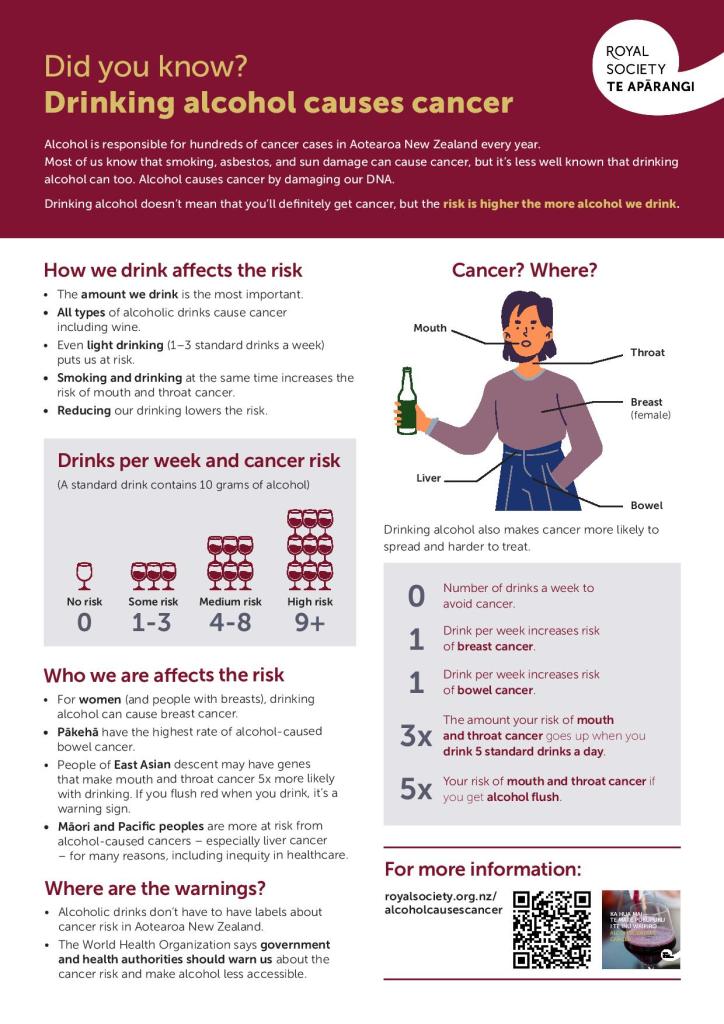
A factsheet published in October 2024 by the Royal Society Te Apārangi highlights the significant link between alcohol consumption and cancer in Aotearoa New Zealand. The report, titled ‘Ka Hua Mai Te Mate Pukupuku I Te Inu Waipiro – Alcohol Causes Cancer,’ compiles robust evidence emphasizing that alcohol contributes significantly to various cancers. A striking assessment from Health New Zealand | Te Whatu Ora revealed that cancer accounted for 42 percent of alcohol-related deaths, making it the leading cause among the 901 alcohol-attributable fatalities documented in the studied period.
Emeritus Professor Jennie Connor of the University of Otago detailed multiple mechanisms through which alcohol induces cancer. These include causing genetic mutations, facilitating other carcinogens’ entry into cells, disrupting hormonal balances, and promoting metastasis. The factsheet specifically identifies mouth and throat cancer, breast cancer in women, liver cancer, and bowel cancer as directly linked to alcohol consumption.
Despite the well-established connection between alcohol and cancer, public awareness in New Zealand remains alarmingly low. While four out of five adults in the country consume alcohol, research has shown that over 80 percent of the population is unaware of its carcinogenic risks. The factsheet underscores that even moderate drinking—just one or two drinks per week—can increase cancer risk. This finding is particularly significant given current Ministry of Health guidelines, which are considerably less stringent compared to international recommendations.
The report also highlights significant disparities in health outcomes, particularly affecting Māori populations. Professor Sue Crengle, a GP and Māori health researcher, noted that Māori individuals face a higher burden from alcohol-related cancers due to systemic health inequalities. To mitigate these risks, the Royal Society Te Apārangi recommends that the New Zealand government adopt World Health Organization-endorsed policies, including pricing regulation, reducing alcohol availability, and restricting marketing to effectively reduce alcohol-related cancer incidences.
Find more from Royal Society Te Apārangi (New Zealand, 2024)
 Alcohol Awareness