
As we enter November, communities worldwide are reminded of the deep and ongoing impact of drug-related deaths. From the opioid crisis in the United States to narcotics-related deaths in Sweden, efforts to honor those affected and push for meaningful change continue to grow. Two prominent initiatives—the National Safety Council’s (NSC) “Stop Everyday Killers” campaign in the U.S. and the annual narcotics memorial in Sweden and in other Nordic countries—highlight the urgent need to address the consequences of drug misuse and overdose.
“Stop Everyday Killers”: A face to the opioid crisis
Launched in November 2017, the National Safety Council’s “Stop Everyday Killers” campaign has made an enduring impact, especially through its powerful interactive memorial, “Prescribed to Death.” This traveling exhibit brings the opioid epidemic to a human level by featuring a wall of thousands of carved pills, each bearing the face of an individual lost to prescription opioid overdose. Initially displayed in Chicago, the memorial has since toured the country, reaching cities like Washington, D.C., Atlanta, and Houston, sparking conversations about the opioid crisis.
With over 20,000 people dying annually from prescription opioid overdoses in the U.S., the “Stop Everyday Killers” campaign seeks to personalize this tragedy and encourage preventive action. In addition to the memorial, NSC introduced the “Opioids: Warn Me” labels for pharmacy and insurance cards. These labels serve as reminders to ask healthcare providers about the risks of opioids and alternative treatments. This part of the campaign aims to reduce the likelihood of opioid misuse by encouraging awareness of the substances being prescribed. Alongside this, Stericycle partnered with NSC to offer pre-paid Seal&Send envelopes, enabling people to safely dispose of unused medications, reducing access to these potentially dangerous drugs.

A significant digital component, the “Celebrating Lost Loved Ones” map, allows families to memorialize their loved ones who died from opioids by adding their images and stories. Created by Jeremiah Lindemann, whose own brother was a victim of an opioid overdose, this interactive map is a growing testament to the widespread devastation of the epidemic, featuring over 1,300 tributes.
Remembering narcotics victims in Sweden: a light in memory and a call to action
In Sweden, November 1 marks an annual day of remembrance for victims of drug misuse. Each year, the Stockholm Sober Alliance (Stockholms Länsnykterhetsförbund) and the Swedish Drug Policy Center (Narkotikapolitiskt Center) invite the public to light candles for those who have lost their lives due to narcotics, with a message of support for grieving families. The event, held digitally and at significant locations like Stockholm’s Sergels Torg, emphasizes both remembrance and a call for greater action to prevent future tragedies.
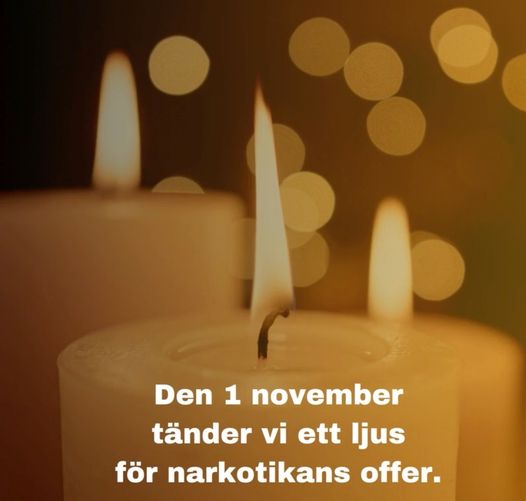
Drug-related deaths have remained alarmingly high in Sweden, with more than 800 fatalities reported in recent years. Although there has been a slight decrease in these numbers since 2015, much remains to be done. Public health officials attribute this decline to the increased availability of naloxone, an overdose-reversal drug, as well as expanded needle exchange programs and medication-assisted treatments. However, deaths among women and those struggling with mental health issues have increased, highlighting the need for a broader, more supportive healthcare framework.
Community efforts focus on treating addiction not as an isolated issue but as a complex challenge that often intersects with social and mental health problems. Leaders in the field call for integrated care that supports those struggling with addiction, helping them secure housing, employment, and social support, especially for those facing stigma and isolation post-recovery.
Shared goals, different approaches
Though the approaches vary—NSC’s “Stop Everyday Killers” in the U.S. with its powerful visual memorials and preventive tools, and Sweden’s candle-lighting tradition and community outreach—the goal is universal: to remember those lost and prevent future tragedies. These initiatives reflect a shared understanding that drug-related deaths are preventable and that society has a collective responsibility to support affected families, reduce stigma, and implement robust public health measures.
As these initiatives continue, they serve as reminders that behind the statistics are real lives—individuals who were deeply loved and whose losses have left indelible marks on their families and communities. Whether through a pill-marked memorial wall or a candle’s glow on a November evening, the message is clear: it’s time to honor these lives and take concerted steps to prevent further loss.
In Finland, remembrance ceremonies are open events where people can come together to reflect quietly and light a candle in memory of loved ones. These gatherings honor those who have passed due to substance use, offering a supportive space for family and friends to express their grief without fear of stigma. Held across Finland during the All Saints’ Day period, these events provide a meaningful environment where loss can be openly acknowledged and shared. Learn more from HERE
 Alcohol Awareness