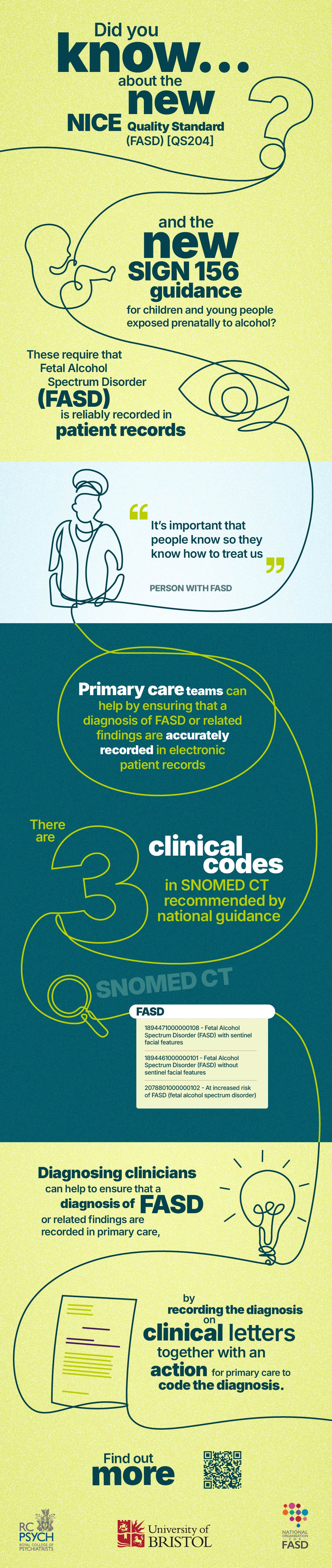
The University of Bristol’s project on improving clinical coding for Fetal Alcohol Spectrum Disorder (FASD) aims to close the data gap related to this under-diagnosed condition. With the introduction of new SNOMED CT codes by NHS England in April 2024, clinicians can now more accurately record FASD diagnoses within electronic patient records, reflecting the full spectrum of the disorder. This development aligns with the NICE Quality Standard (QS204) and enables better linkage to other routine data sources, such as a National Linked Database for FASD, which will enhance the understanding of FASD’s impact on individuals and the population.
The newly implemented codes include: FASD with sentinel facial features (1894471000000108), FASD without sentinel facial features (1894461000000101), and “at increased risk of FASD” (2078801000000102). These codes are now available in clinical systems such as EMIS and SystmOne. Improved clinical coding for FASD will facilitate monitoring key outcomes, including diagnosis rates, time to diagnosis, and the development of management plans for those affected. Moreover, this will support further research and evidence-based support for people living with FASD, a condition that affects approximately 2-4% of children in the UK.
In regions where SNOMED CT codes are not yet implemented, such as Scotland and Wales, clinicians are encouraged to record FASD diagnoses using the International Classification of Diseases (ICD-10 or ICD-11). The University of Bristol team, supported by the Knowledge Mobilisation Catalyst Fund, is raising awareness of these new codes through resources like animations, infographics, and posters, all designed to increase their uptake in clinical practice. This initiative has received strong endorsements from experts like Sandra Butcher of the National Organisation for FASD, Dr. Patricia Jackson from the SIGN Guideline Group, and Professor Raja Mukherjee, highlighting the critical role of accurate and consistent coding in improving care for individuals with FASD.
Find more from the University of Bristol (UK, September 2024)
 Alcohol Awareness